

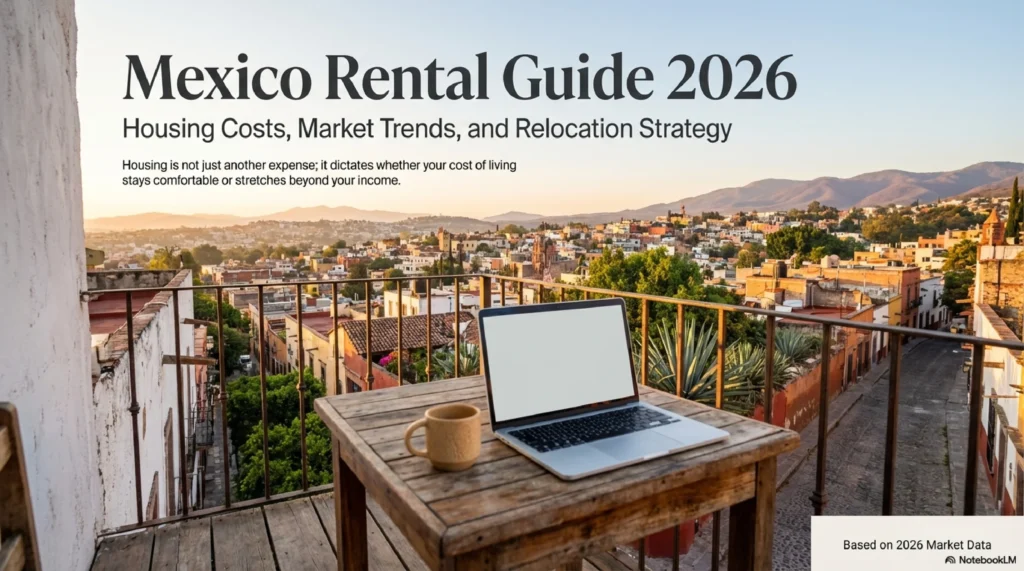
Understanding rent in Mexico is the most important part of your relocation math. In simple terms, housing is not just another expense. Instead, it decides whether your overall Mexico cost of living stays comfortable or slowly stretches beyond your income.
Many Americans looking at Mexico apartment rent start with short-term listings or Airbnb-style platforms. However, those numbers are often inflated. In reality, pricing depends on the city, the specific neighborhood, the lease length, and whether the unit is furnished.

According to housing data from INEGI (Mexico’s National Institute of Statistics and Geography) and inflation reports from Banco de México , rent growth is different in inland cities compared to coastal markets.
In addition, international databases such as Numbeo and purchasing power comparisons from the OECD help show how Mexico compares globally.
In this guide, you will see realistic average rent in Mexico, clear price differences between cities, and practical ways to calculate your real housing cost in Mexico.
For a full financial picture, review the broader Mexico cost of living guide. Then, compare housing choices against your structured Mexico monthly budget so everything works together.
Average Rent by City
There is no single national price for Mexico rental prices. Instead, the country operates in layers. Tourism demand, infrastructure, safety perception, and local salaries all influence rent levels.
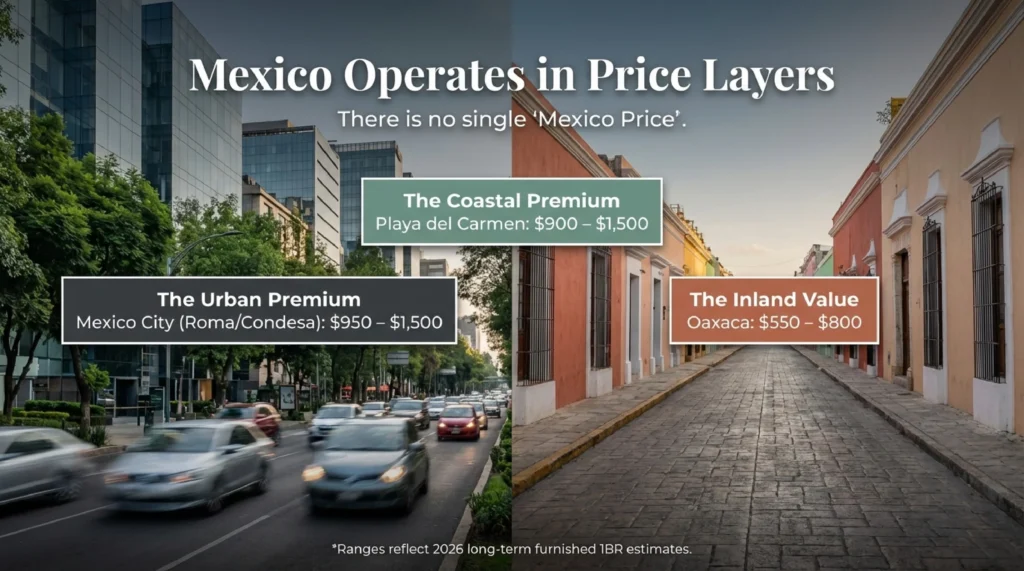
Below are realistic 2026 long-term furnished one-bedroom rental ranges in normal, livable neighborhoods rather than luxury towers.
| Mexico City (Roma / Condesa tier) | $950 – $1,500 |
| Mexico City (secondary zones) | $650 – $950 |
| Playa del Carmen | $900 – $1,500 |
| Puerto Vallarta | $850 – $1,350 |
| Guadalajara | $700 – $1,100 |
| Mérida | $600 – $900 |
| Oaxaca | $550 – $800 |
| Querétaro | $650 – $950 |
These ranges reflect long-term listings and match regional income comparisons reported by INEGI and OECD purchasing power data.
Mexico City
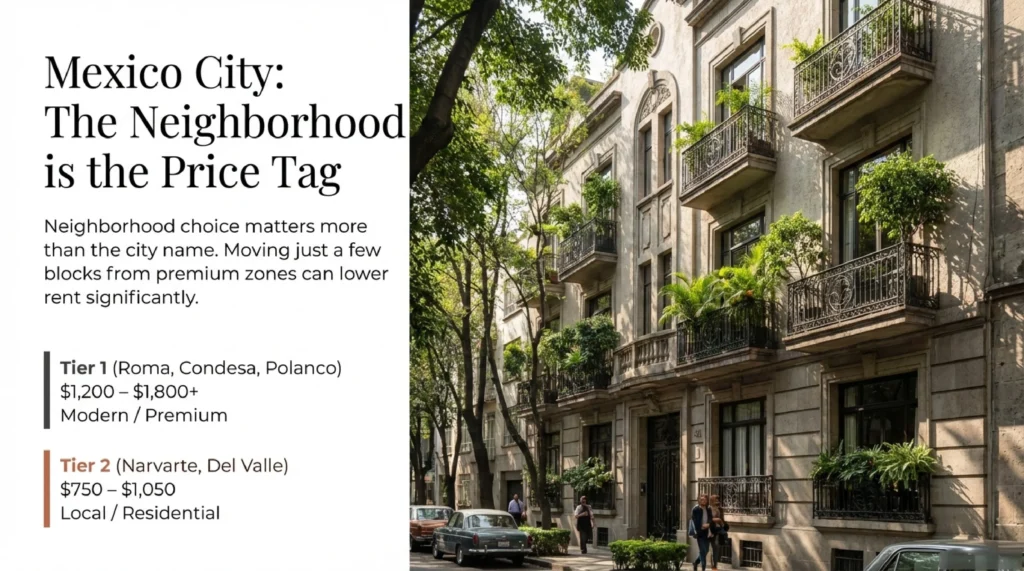
Mexico City has the widest range in rent in Mexico.
For example, premium areas like Roma, Condesa, Polanco, and Reforma often exceed $1,200 for modern one-bedroom units.
Meanwhile, moving a few neighborhoods away can lower prices below $900 for similar space.
Therefore, neighborhood choice matters more than the city name itself.
Playa del Carmen and Puerto Vallarta

Beach cities usually cost more. This happens because tourism keeps demand strong year-round. As a result, Mexico apartment rent in coastal zones stays elevated.
Ocean views, newer buildings, and short-term rental competition also push pricing higher. Consequently, beach markets often sit at the top of national averages.
Mérida, Oaxaca, Querétaro
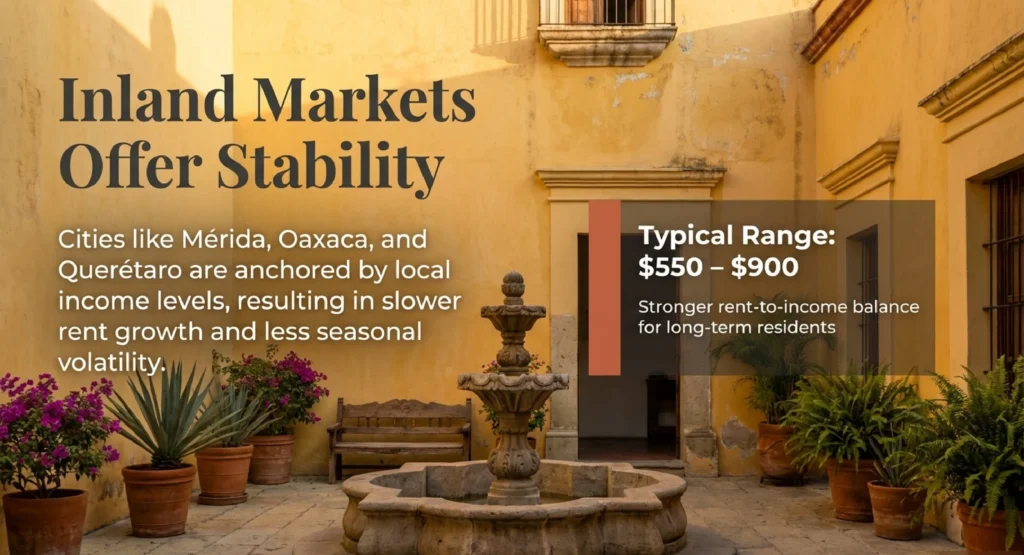
In contrast, inland cities tend to show more stable average rent in Mexico. Since tourism pressure is lower and local income anchors pricing, rent growth is slower.
For long-term relocation, these markets often provide stronger rent-to-income balance.
For a full ranked comparison of the most affordable cities and what each one realistically costs long term, see cheapest cities in Mexico full guide.
Furnished vs Unfurnished Apartments
Another major factor in housing cost in Mexico is whether the apartment is furnished.
Furnished Units

Most expats choose furnished units because they are easier at the beginning. You arrive, move in, and avoid buying furniture. However, furnished apartments usually cost $100 to $300 more per month.
So, if your stay is under two years, furnished often makes practical sense.
Unfurnished Units
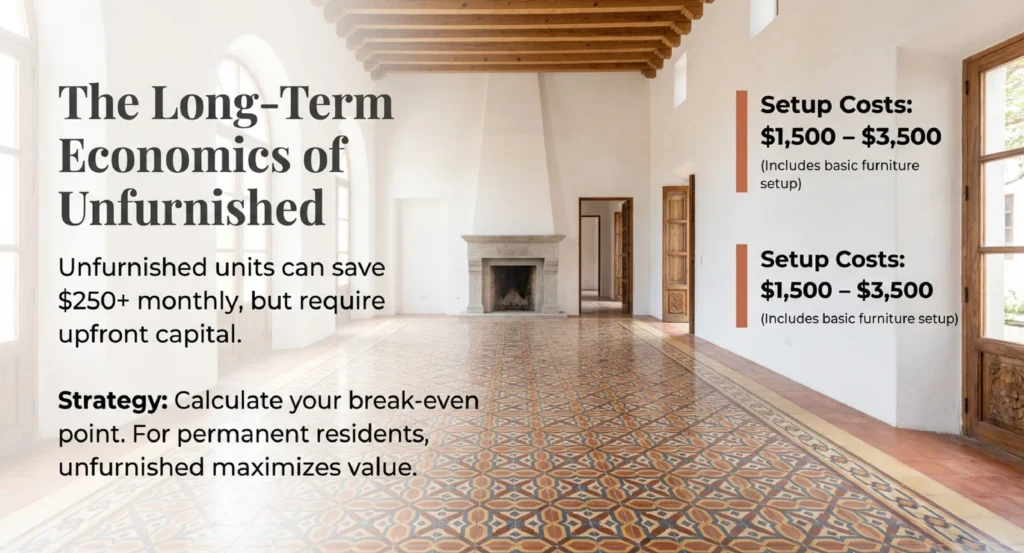
On the other hand, unfurnished apartments are cheaper long term. In some cities, the difference can exceed $250 per month.
Still, you must budget for furniture. Basic setup costs can range from $1,500 to $3,500 depending on quality. Because of this, long-term residents should calculate a break-even point before deciding.
Always compare this decision with your full Mexico monthly budget, not just rent alone.
Beach vs Inland Price Differences
The biggest divide in rent in Mexico is coastal versus inland markets.
Why Beach Cities Cost More
First, tourism increases landlord confidence. Second, short-term rental platforms compete with long-term tenants. In addition, imported stores and expat infrastructure raise price expectations. Finally, heavy air conditioning use increases electricity costs, which landlords often factor into rent.
Because of these factors, Mexico rental prices in beach cities usually sit above national inland averages.
Why Inland Cities Are More Stable
Inland markets are more connected to local income levels. As a result, rent growth tends to be moderate.
Seasonal swings are smaller. Short-term rental competition is weaker. Moreover, Banco de México inflation reports show more balanced housing growth in non-tourism regions.
Therefore, inland cities often offer more predictable long-term rental stability.
Hidden Rental Costs
When calculating rent in Mexico, the monthly number alone is not enough. You also need to include additional expenses.
Security Deposits
Most landlords ask for one month deposit. In some cases, they require two months. Therefore, a $1,000 apartment might require $2,000 to $3,000 upfront including the first payment.
Utilities and HOA Fees

Utilities are sometimes excluded. For example, electricity in hot coastal areas can exceed $120 during peak summer months. Additionally, some buildings charge maintenance or HOA fees separately.
Contract and Legal Fees
Certain rentals require formal contracts or guarantor arrangements. Although not always expensive, these fees must be included in your real housing cost in Mexico.
If you are relocating long term, budgeting for residency from the start protects your plan.
Health coverage is another cost many people leave out of the initial budget. VisitorsCoverage offers flexible plans that work across Mexico without requiring a long-term commitment before you know which city you are settling in.
For a full breakdown of fees and timelines, see Mexico retirement visa cost.
Currency Exposure

If your income is in USD but rent is paid in pesos, exchange rate changes matter. Over time, peso fluctuations tracked by Banco de México and IMF data can increase or decrease your real rent cost.
Most expats paying rent in pesos from a USD account use Wise to convert at real exchange rates each month. It keeps the actual cost closer to what you budgeted, without the bank markup eating into your margin.
For this reason, building a currency buffer is smart.
Annual Rent Increases
In high-demand markets, landlords often raise rent each year. While not extreme, increases are common. Therefore, long-term planning should assume moderate annual growth instead of fixed pricing.
Negotiating Rent in Mexico

In some cities, negotiation is possible. For example, longer leases may improve your position. Likewise, offering several months upfront can sometimes reduce rent.
However, in popular beach areas, flexibility is limited because demand remains strong. In addition, property managers are usually less flexible than private owners.
As a result, realistic expectations work better than aggressive discount requests.
Rent Growth and Inflation Outlook
Housing inflation varies by region. Data from INEGI housing indexes and Banco de México reports show coastal areas often experiencing stronger upward pressure than inland cities.
Meanwhile, World Bank economic data confirms Mexico’s broader stability, although local rental markets respond differently depending on tourism and foreign demand.
When planning relocation, assume moderate yearly increases rather than static pricing.
City-by-City Deep Breakdown
Below is a clearer look at rent in Mexico by major relocation markets. These summaries focus on real neighborhood tiers and practical long-term expectations.
Mexico City Deep Breakdown
Mexico City is the most complex rental market. Mexico apartment rent varies heavily by colonia.
Tier 1 areas like Roma Norte, Condesa, Polanco, and Reforma often range from $1,200 to $1,800 for modern units. Luxury towers can exceed $2,000.
Meanwhile, Tier 2 areas such as Narvarte, Del Valle, and Escandón usually range from $750 to $1,050. Therefore, many expats find better rent-to-income balance outside premium zones.
Utilities are moderate because the climate is milder than coastal cities. In addition, internet infrastructure is strong.
Playa del Carmen Deep Breakdown
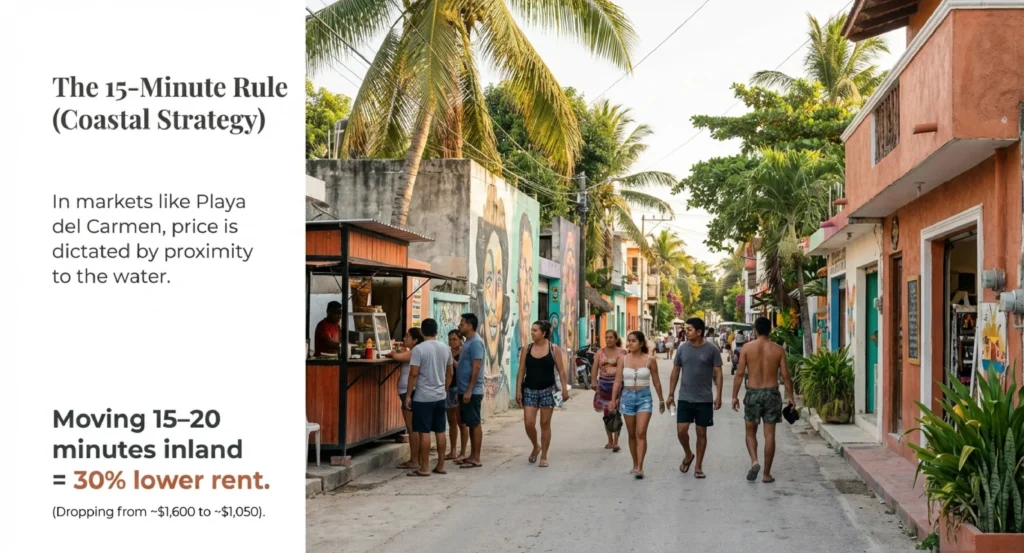
Playa del Carmen pricing depends heavily on distance from the beach. Units within walking distance often range from $1,000 to $1,600. However, moving 15–20 minutes inland can reduce rent to $750 to $1,050.
Because air conditioning runs year-round, electricity is a meaningful expense here.
For that reason, inland neighborhoods often improve total cost stability within your broader Mexico cost of living.
Puerto Vallarta Deep Breakdown
Puerto Vallarta follows similar patterns. Central zones like Zona Romántica often exceed $1,200. On the other hand, inland residential neighborhoods may offer $800 to $1,100 options.
Although lifestyle appeal is strong, average rent in Mexico comparisons place Puerto Vallarta near the upper range nationally.
Mérida Deep Breakdown

Mérida offers one of the most stable inland structures. Many apartments range from $600 to $900 in safe neighborhoods.
Gated communities with pools may exceed $1,100. Even so, prices usually remain below coastal equivalents.
As a result, Mérida is frequently chosen by retirees focused on moderate Mexico rental prices.
Oaxaca Deep Breakdown
Oaxaca remains one of the strongest value cities. Centro areas can range from $750 to $1,100 due to tourism. However, residential neighborhoods often fall between $550 and $800.
Infrastructure varies by zone, so property visits are important.
Guadalajara Deep Breakdown
Guadalajara sits between Mexico City and smaller inland markets. Popular areas like Colonia Americana often range from $900 to $1,400. Meanwhile, residential districts may offer $700 to $1,000 pricing.
Because Guadalajara has a larger economy, rental growth tends to be steady rather than volatile.
Frequently Asked Questions
What is the average rent in Mexico in 2026?
The average rent in Mexico depends on city. Inland markets often range from $600 to $900 for furnished one-bedrooms, while beach cities commonly range from $900 to $1,500.
How much is Mexico apartment rent in beach cities?
In Playa del Carmen and Puerto Vallarta, one-bedroom units usually range between $900 and $1,500 depending on location and building type.
Is housing cost in Mexico lower than the United States?
In many U.S. cities, one-bedrooms range from $1,500 to $2,200. By comparison, many Mexican inland cities remain significantly lower. However, premium beach units narrow the gap.
Do Mexico rental prices increase yearly?
Yes, especially in high-demand areas. However, inland cities generally experience slower growth.
Is it better to rent before arriving?
Whenever possible, view properties in person. Online listings can misrepresent both neighborhood quality and true pricing.
Final Perspective on Rent in Mexico
Ultimately, your relocation plan depends on rent selection.

If housing cost stays aligned with income, your broader Mexico cost of living remains manageable. However, if rent exceeds safe ratios, other lifestyle spending becomes pressured.
The smart approach to rent in Mexico is simple: choose the right neighborhood, secure a stable lease, understand hidden costs, and protect margin.
Everything else adjusts around that decision.

Best Things to Do in Pattaya Beyond Nightlife (2026 Edition)
Introduction Pattaya is often reduced to its nightlife, but that only tells part of the story. If you are searching for…

Can You Really Live in Mexico on $2,000 a Month? (2026 Comfortable Lifestyle Breakdown)
If you’re researching whether you can realistically live in Mexico on 2000 a month, you are probably asking a deeper…

How to Avoid Tourist Scams in Pattaya (2026 Safety Guide)
Don’t let scams ruin your Pattaya trip. In this 2025 guide, discover the most common tourist traps from overpriced taxis…

What Is Pattaya Famous For? Attractions, Nightlife & Beaches (2026)
Introduction If you ask most people what Pattaya is famous for?, they usually mention nightlife first. That reputation is real, but…