Table of Contents
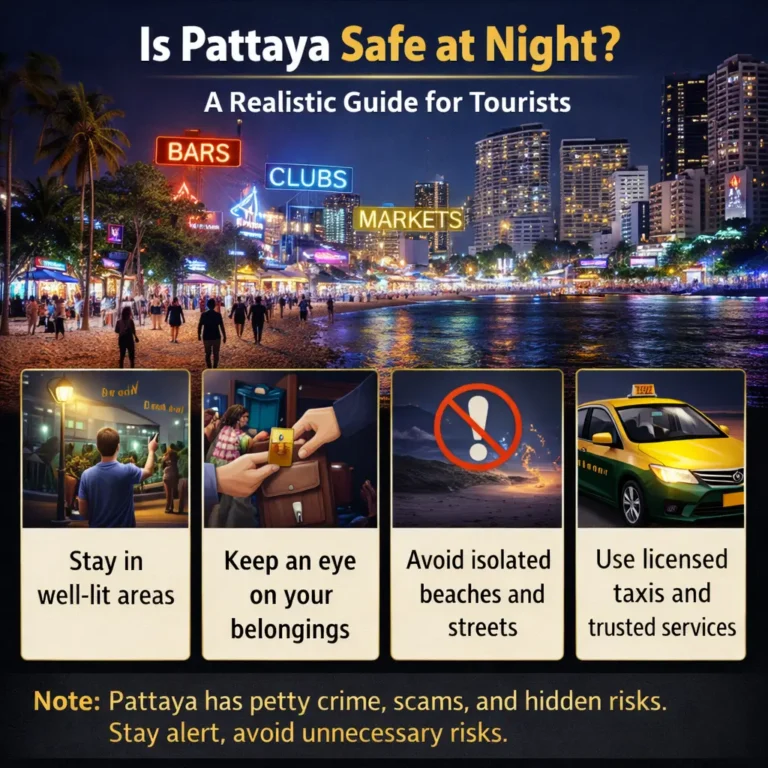
- Why Pattaya Needs Extra Caution?
- The Most Common Tourist Scams in Pattaya (2025)
- Over-Priced Tuk-Tuk or Motobike Taxi Ride
- Hidden Bar and Restaurant Bills
- The Ping-Pong Show Trap
- Fake Currency Exchange or Card Skimming
- Dating and Companion Scams
- Other Common Scams to Watch For
- How to Protect Yourself in Pattaya
- Money and Cards
- Dating and Social Invitations
- Cost of Living Abroad: The Hidden Variable in Pattaya
- If You’re Targeted
- Why Scams Persist in Pattaya
- My Video EXPOSING A SCAM
- Final Thoughts
- FAQ
Pattaya attracts short-term tourists, long-stay expats, and Americans testing life abroad.
That mix creates opportunity, and not all of it is honest.
This guide breaks down the most common tourist scams in Pattaya, how they affect your real cost of living, and how to move around the city without leaking money.
If you are comparing the cost of living in Pattaya to the U.S., understanding how to avoid scams in Pattaya is part of the math.
Why Pattaya Needs Extra Caution?
During my first week walking down Walking Street, I saw it all: even though i came in the raining season(when is it?) it was glowing neon, loud bars, friendly smiles that felt a little too quick. It’s fun until it’s not. Over the past year, in the raining season Thai police have been cracking down on several scam networks (Khaosod English, 2025), but petty street scams still happen daily.
The faces change, the tactics evolve, but the psychology is the same confident tourists make easy marks.
The Most Common Tourist Scams in Pattaya (2025)
Over-Priced Tuk-Tuk or Motobike Taxi Ride
Let’s start with the basics. There are two main transport options tourists often mix up:
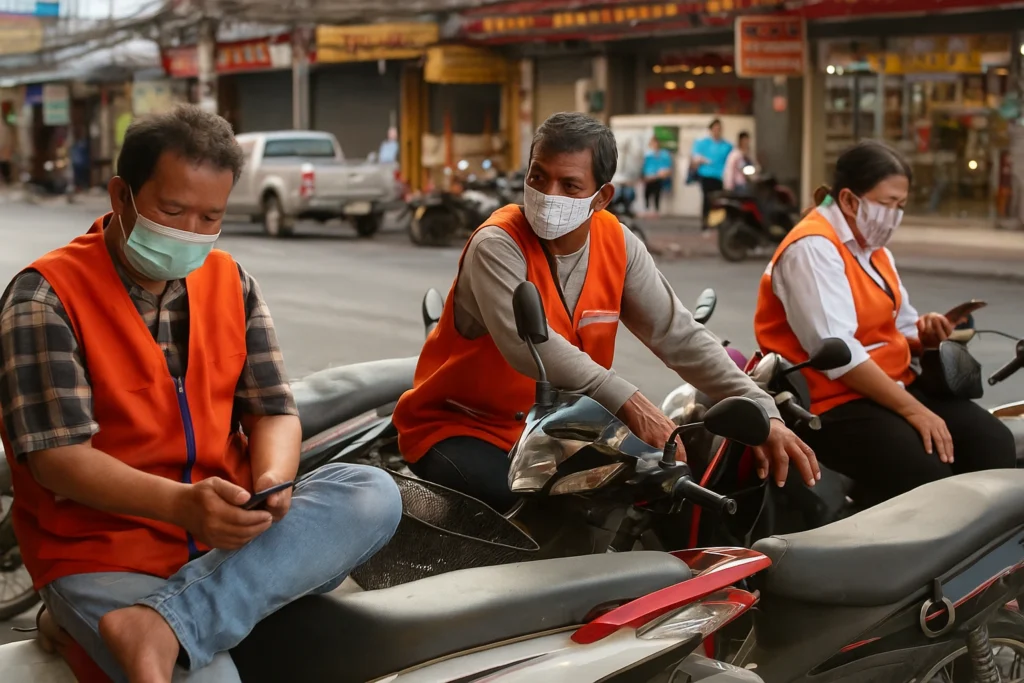
- Orange Motorbike Taxis – fast but expensive, especially compared to Bolt or Grab. They charge foreigners extra, even for short hops.
- Tuk-Tuk Buses (Baht Bus) – shared trucks that loop around town. Locals drop 10 baht and walk away. Tourists who ask, “how much?” or hesitate often get quoted five to ten times the real fare.
Rule of thumb: If you’re on the Baht Bus, hand over 10 baht and keep walking. Don’t negotiate, don’t overthink. And if a motorbike taxi quotes more than the app, decline politely and order online. (Siam Legal, 2025)
Hidden Bar and Restaurant Bills
One of the oldest tricks: you sit down, order food or drinks without checking the price, and later get hit with a surprise bill that’s inflated beyond reason. Bars on Walking Street are notorious for this. Always ask, “How much?” before you order anything.
Don’t assume the menu price is what you’ll pay, many places charge “service fees” that appear only at checkout.
The Ping-Pong Show Trap
You’ll hear the pitches every night: “Come see a free show!” Nothing about it is free. The so-called ping-pong shows are not only exploitative, they’re designed to extract as much money from you as possible. Drinks cost ten times normal, exit fees appear, and if you complain, security suddenly surrounds you. Skip it entirely. What’s advertised as entertainment is usually built on exploitation and manipulation.
Fake Currency Exchange or Card Skimming
You’ll see tiny booths promising “Best Exchange Rate in Pattaya”. Many of them are fronts for card skimming. Stick to major bank branches or booths clearly marked with names like Bangkok Bank or Kasikorn Bank. Avoid machines outside convenience stores and stay away from ATMs that look modified or have loose card slots. (It’s Better in Thailand, 2025)
From my personal experience if ATM takes you card say good bye to that card because you will not see it again .
Dating and Companion Scams

This one’s less talked about but common. You meet someone friendly, go for dinner or drinks, and suddenly you’re footing an enormous bill for both of you. Sometimes, it escalates into requests for money, gifts, or help with “emergencies.” Be kind but cautious. Real connections in Pattaya exist, but many so-called dates are business transactions in disguise.
Other Common Scams to Watch For
- Jet-ski or scooter damage scam: You rent, return it undamaged, and get told you scratched it. Always take photos before riding.
- Tailor or gem shop scam: You’re offered a “special deal,” pressured to buy overpriced stones or suits. (Wikipedia, Thai tailor scam)
- Fake tours: Cheap day trips that never happen. Book through verified platforms only.
How to Protect Yourself in Pattaya
Before You Go
- Research normal fares between main spots like Walking Street, Beach Road, and Jomtien.
And if you plan trips outside Pattaya, you can book buses and ferries safely through 12Go Asia (click here). - Download Grab and Bolt for price comparison.
For reliable mobile data to book safe rides at night, set up an Airalo eSIM before arriving in Thailand (click here). - Avoid “too good to be true” packages or guides on Facebook groups.
Getting Around
Use apps when possible. If you hop on a motorbike taxi, confirm the fare before riding. For tuk-tuks, the 10-baht rule applies unless you’re chartering one privately then negotiate firmly before starting.
Bars and Nightlife

- Ask the price before ordering anything.
- Keep your drink in sight.
- Avoid “special” or “free show” offers from street promoters.
Money and Cards
Use only official exchange counters or ATMs inside a bank branch. Cover your PIN and avoid counting large bills in public. (Siam Legal, 2025)
And if you’re using public WiFi around nightlife zones, protect your data from skimming attempts by using NordVPN (click here).
Dating and Social Invitations
If you accept an invite, make it casual. Meet in public places. Pay separately. If the person insists on expensive restaurants or private venues, that’s your cue to step back.
Cost of Living Abroad: The Hidden Variable in Pattaya
When Americans calculate the cost of living abroad, they usually compare rent, groceries, health insurance, and transportation. The spreadsheet looks simple.
What rarely gets calculated is behavioral cost.
In Pattaya, the gap between tourist pricing and resident pricing can distort your numbers fast.
Here is what that looks like in real terms:
• Paying 100 baht extra per day in transport = 3,000 baht per month
• Two inflated nightlife nights per week = 8,000 baht per month
• One avoidable dispute or rental issue = 10,000 baht+
That can easily reach 20,000 baht per month.
At current exchange rates, that is roughly $550 to $600 USD.
For many Americans, that equals:
• A full monthly grocery budget
• Private health insurance
• Half the rent on a modern condo
• Or a round-trip domestic flight back to the U.S.
On paper, Thailand looks dramatically cheaper than the United States.
In practice, the savings only hold if you operate at local pricing, not tourist pricing.
Cost of living abroad is not just about choosing a cheaper country. It is about eliminating unnecessary financial friction inside that country.
If You’re Targeted
Stay calm, step away from confrontation, and gather evidence. Take photos, note details, and inform your hotel staff. You can contact the Thai Tourist Police at 1155 or visit the nearest station. (Siam Legal, 2025)
Why Scams Persist in Pattaya
Pattaya thrives on tourism, and with millions visiting every year, a small percentage see tourists as income opportunities.
Law enforcement has improved see recent arrests of criminal networks (Pattaya Mail, 2025) but it’s a city built on fast cash.
Knowing how the system works is the only way to move freely without becoming part of it.
My Video EXPOSING A SCAM
In my latest YouTube video, I walk through Walking Street Pattaya at night, pointing out real-world examples of common scams. From drink pricing traps to tuk-tuk negotiations, you’ll see what to avoid before you even land.
Final Thoughts
Pattaya isn’t dangerous, it’s just sharp. Once you understand the rhythm, it’s easy to enjoy everything that makes it famous—without getting burned. Know the price, trust your instincts, and remember that “friendly” isn’t always free.
FAQ
1. What’s a fair tuk-tuk fare in Pattaya?
Local shared baht buses cost 10 baht per ride along main routes. Anything over 20 baht means you’re overpaying.
2. Are ping-pong shows legal?
They operate in legal grey areas and are often linked to exploitation. Visiting them is risky and not worth the hassle.
3. What should I do if I get a fake bill or overcharge?
Stay calm, refuse to sign or pay immediately, and ask to call the tourist police at 1155. Many scams collapse when you mention the police.
4. Is it safe to use ride apps like Bolt or Grab in Pattaya?
Yes, they’re safer and cheaper than street rides. Locals use them too, and prices are transparent.
5. How can I exchange money safely?
Stick to booths connected to major banks such as Bangkok Bank, Krungthai, or Kasikorn Bank. Avoid isolated stalls or night exchanges offering “premium” rates.
Recommended Thailand Relocation ResourcesIf you are planning a long-term move, retirement, or extended stay in Thailand, these are the tools and services that make the process smoother from banking to healthcare and compliance.
For a complete breakdown of relocation planning tools, visit:
👉 Takviewer.com/relocation-resources
Core Services I Use and Recommend for Long-Term Living:
• Transport: 12Go Asia(CLICK) – Best for every long rides in Thailand and Asia.• Tours & Activities: GetYourGuide / Klook – Best for booking a Activities.
• Insurance: VisitorsCoverage (CLICK) – Best for Asia!
• eSIM: Airalo (CLICK) – Best eSIM for travelers.
• Flights: Kiwi – Best for finding cheap flights / hotels etc..
• VPN: NordVPN – best for people who care about their online SEFLTY.

Mexico Temporary Resident Visa Income Requirement (2026 Update)
If you’re researching mexico temporary resident visa income requirement, you are likely trying to answer one critical question: do you…

How Much Money Do You Need to Move to Mexico? (2026 Real Cost Breakdown)
If you’re researching how much money do you need to move to mexico, you are not just asking about rent….
Mexico vs USA Cost of Living (2026 Real Comparison Guide)
If you’re researching mexico vs usa cost of living, you are likely asking a practical question. Is Mexico actually cheaper…
Can You Really Live in Mexico on $2,000 a Month? (2026 Comfortable Lifestyle Breakdown)
If you’re researching whether you can realistically live in Mexico on 2000 a month, you are probably asking a deeper…