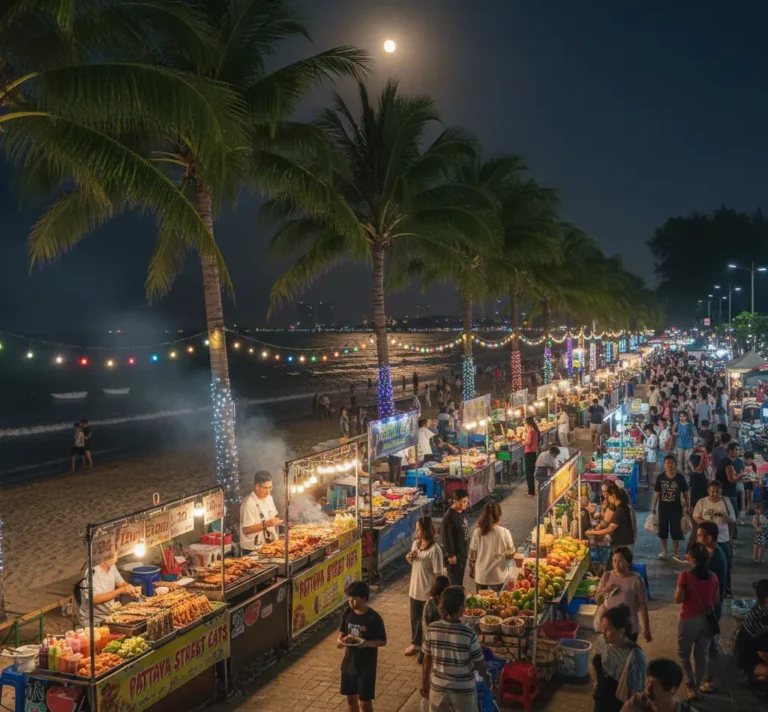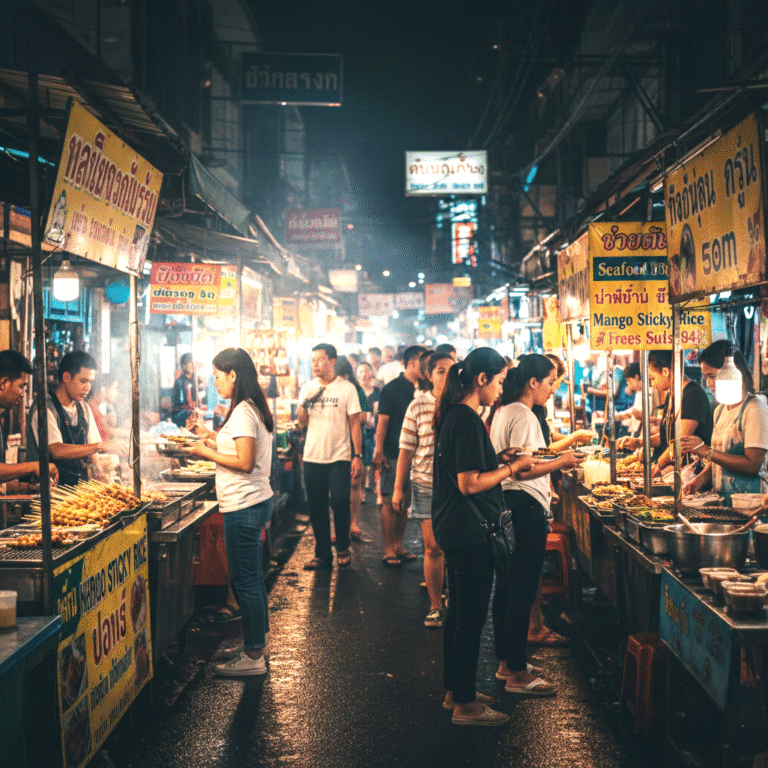
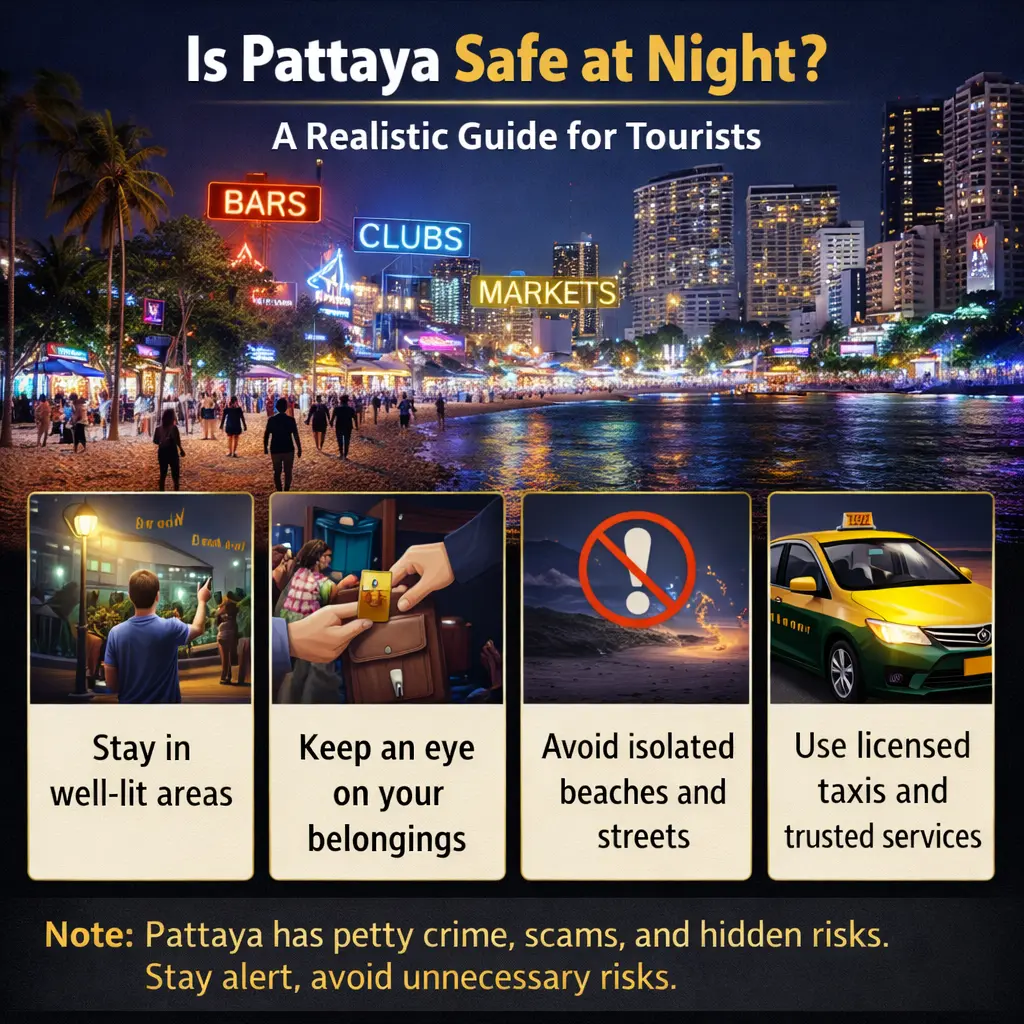
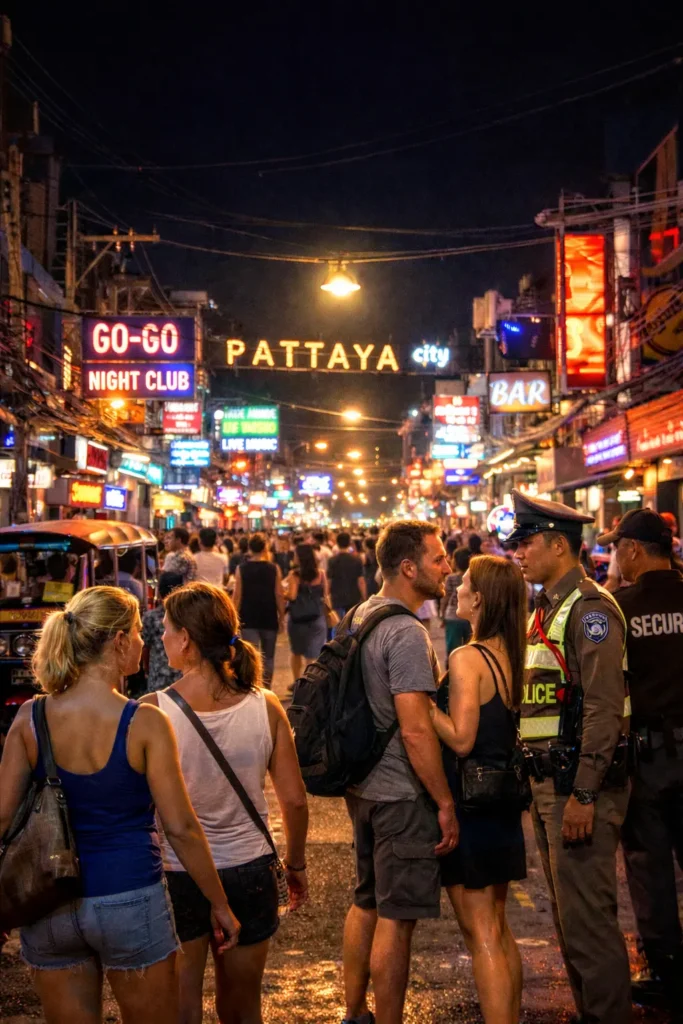
When you first start planning a trip to Pattaya, one of the questions that comes up over and over is: “Is Pattaya safe at night?” Since I’ve been living here for the past three years and filming the city with an unfiltered lens, I get this question almost daily. The short answer is yes, but there’s a lot more nuance. Pattaya is chaotic, fun and full of life; you just need to understand where the real risks are and how to navigate them.
Understanding the risks
Traffic accidents
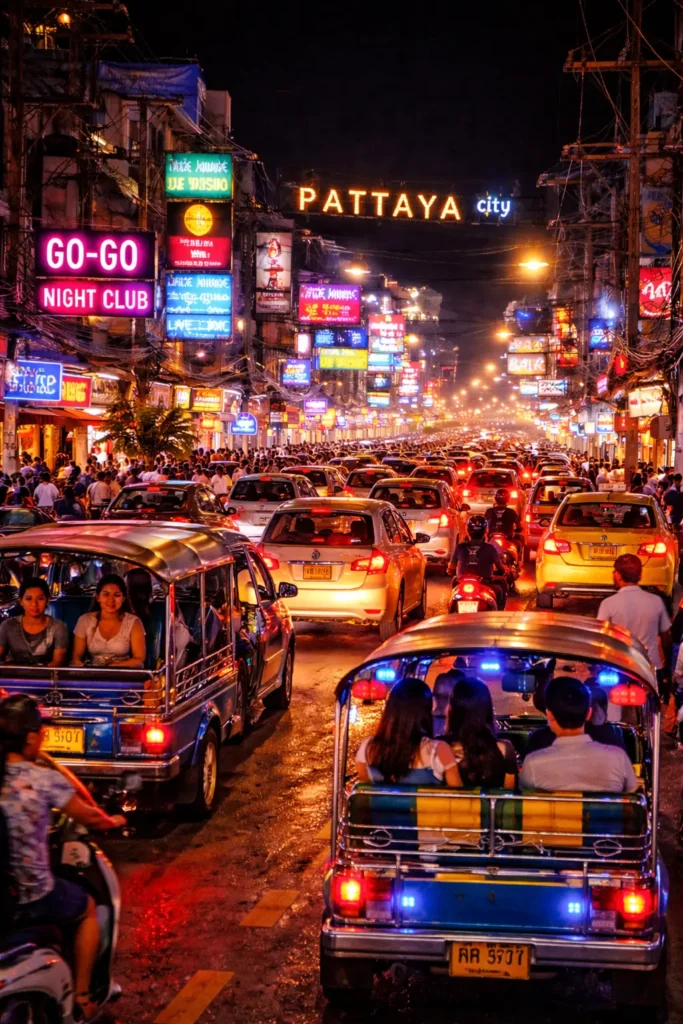
The greatest danger to visitors in Pattaya isn’t violent crime, it’s the traffic.
Cars, motorbikes and songthaews (shared taxis) weave through the streets with little regard for lanes.
According to general travel safety guidance for Thailand, driver skill and attention vary widely, and accidents are common.
If you’re planning to hop on a motorbike taxi after dark, wear a helmet, hold on tight and stay off your phone. Whenever possible I prefer using ride‑hailing services like Bolt or Grab because drivers are rated and routes are tracked. For longer journeys, book tickets with reputable providers. If you need bus or train transport, booking through a trusted platform like 12GO is a reliable way to secure a seat in advance.
Pickpockets and theft
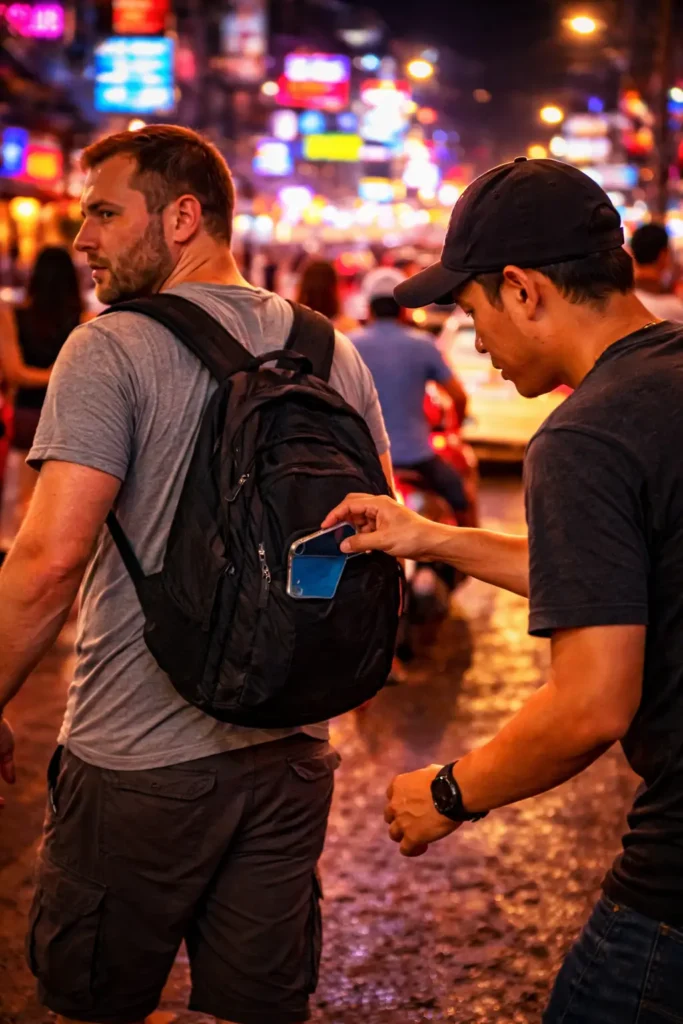
Like any busy tourist city, Pattaya has its share of pickpockets. Bag snatching and petty theft tend to happen late at night around crowded bar districts and walking streets. Don’t flaunt expensive jewelry or watches, and keep your bag or phone strap across your body. Use the same common sense you’d use back home: avoid deserted alleys, stay in well‑lit areas and trust your instincts. As an extra layer of protection for your data, consider using a VPN (I use NordVPN) when connecting to public Wi‑Fi.
Scams and overcharging
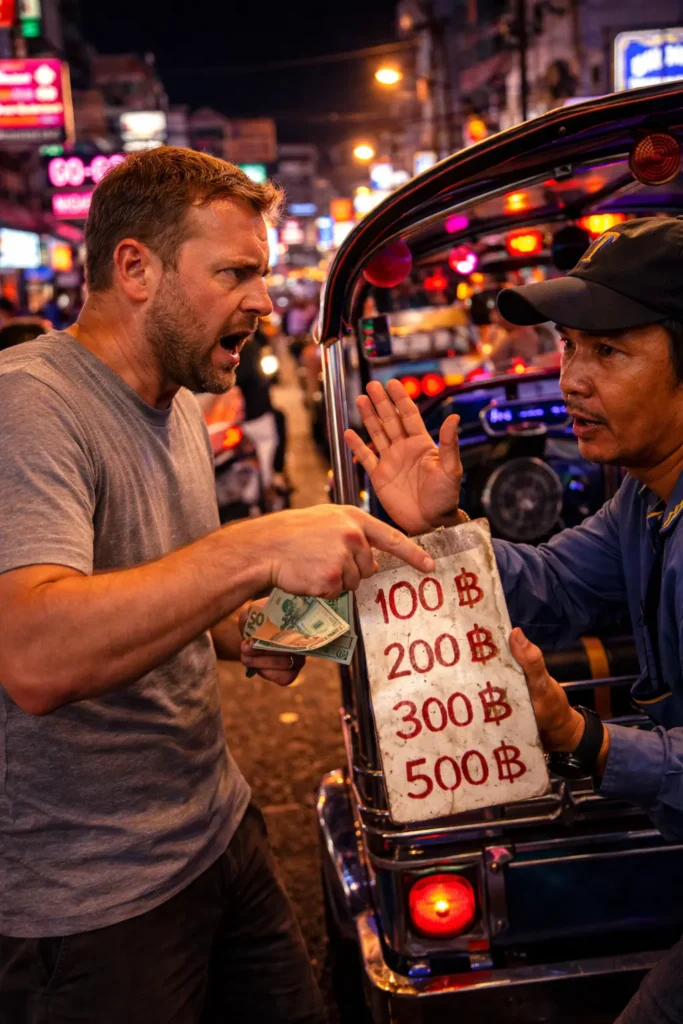
Pattaya is full of hustlers, from tuk‑tuk drivers quoting inflated fares to touts promoting “free” tours that end in overpriced shops. One classic scam is the gem store hustle: someone befriends you on the street, invites you to see a special gem sale and then pressures you to buy. Another is taxi drivers who claim the meter is broken. To avoid this, agree on a price before you get in, or use ride‑hailing apps where the fare is set. If you’re booking excursions or day trips, do it through trusted platforms like GetYourGuide or Klook rather than random street agents.
Violent crime and drugs
Violent crime is much less common than petty theft in Pattaya. Travel advisory sources note that assault and serious crime against tourists are uncommon, though risks increase late at night in red‑light districts.
Most incidents involve drunken fights between visitors. Drugs are illegal in Thailand, and penalties are harsh; avoid anyone offering you substances.
If you’re approached by sex workers or touts and you’re not interested, just say no firmly and keep walking.
The police presence in nightlife areas is strong, but they won’t intervene unless something serious happens, so look out for yourself and your friends.
Staying safe: practical tips
- Watch your drink. Never leave drinks unattended and avoid accepting drinks from strangers unless you can watch them being made.
- Stick together. There’s safety in numbers. Walking with friends can deter potential thieves and reduce misunderstandings.
- Carry ID and a copy of your passport. Nightclubs sometimes check identification; keep your passport locked in your hotel safe.
- Use registered taxis or ride‑hailing apps. Avoid unlicensed motorbike taxis parked on side streets.
- Keep valuables minimal. Leave unnecessary cash, cards and jewellery in the hotel safe.
- Learn basic Thai phrases. A friendly “khop khun kap/ka” (thank you) goes a long way and helps you gauge people’s reactions.
Safer areas to stay and getting around
Most visitors stay in Central Pattaya because it’s close to everything, but you can choose quieter neighborhoods for a more relaxed vibe. Jomtien Beach is laid‑back and popular with families and digital nomads. Naklua is a largely residential area with a calmer atmosphere but still close to the action. Wherever you stay, pick a hotel or guesthouse that has good reviews and 24‑hour reception. For transportation, I use 12GO to book buses or ferries to islands, and Kiwi.com to find cheap flights if I’m leaving the country.
Travel insurance and emergencies
No matter how careful you are, unexpected things can happen. That’s why I never travel without insurance. Companies like SafetyWing and VisitorsCoverage offer affordable policies for digital nomads and short‑term travellers. They cover medical emergencies, trip interruptions and even theft. I also recommend having an international eSIM from Airalo so you always have data to call a Grab, check maps or contact someone if something goes wrong.
Conclusion
Pattaya after dark is a mix of neon lights, street food smoke and thumping music. It’s not dangerous in the way some people imagine, but it does require awareness. Treat the city with respect, follow the same precautions you’d use anywhere and you’ll have a memorable night out. If you’re looking for more in‑depth advice on where to go once the sun sets, check out my Pattaya nightlife guide. And if you want to experience the city beyond its nightlife, I’ve got you covered with posts about where to stay and things to do during the day.
Frequently asked questions
Is Pattaya safe for solo female travellers at night?
Yes, but take the usual precautions. Stick to well‑lit areas, avoid walking alone down alleys, and use registered taxis or ride‑hailing apps to get home.
Do you need to carry your passport with you at night?
It’s safer to leave your passport locked in the hotel safe and carry a photocopy or a photo on your phone. Nightclubs may ask for ID, but a driver’s licence or copy of your passport usually suffices.
Are there curfews or restricted areas?
No, Pattaya doesn’t have a curfew. Bars usually close around 2–3 a.m., but some venues stay open later. Avoid deserted beach areas or dark alleys late at night.
How do I report a crime?
For emergencies, call the Thai tourist police hotline on 1155. They have English‑speaking officers. You can also contact your embassy for assistance.
Are ride‑hailing apps safe?
Yes, apps like Grab and Bolt are widely used by locals and travellers. They provide set fares, driver ratings and GPS tracking.
Do locals go out at night or is it all tourists?
Both! Locals, expats and tourists all mingle in Pattaya’s nightlife districts. Night markets and beer bars attract a mix of people.