

Table of Contents
- Average Monthly Cost of Living in Mexico (2026 Numbers)
- Rent Prices in Mexico by City
- Utilities and Internet Costs in Mexico
- Grocery and Food Expenses
- Healthcare Costs in Mexico for Expats
- Transportation Costs in Mexico
- Cheapest Cities in Mexico for Expats
- Retirement Budget in Mexico (Real Scenarios)
- Can You Live in Mexico on $1,500?
- Frequently Asked Questions
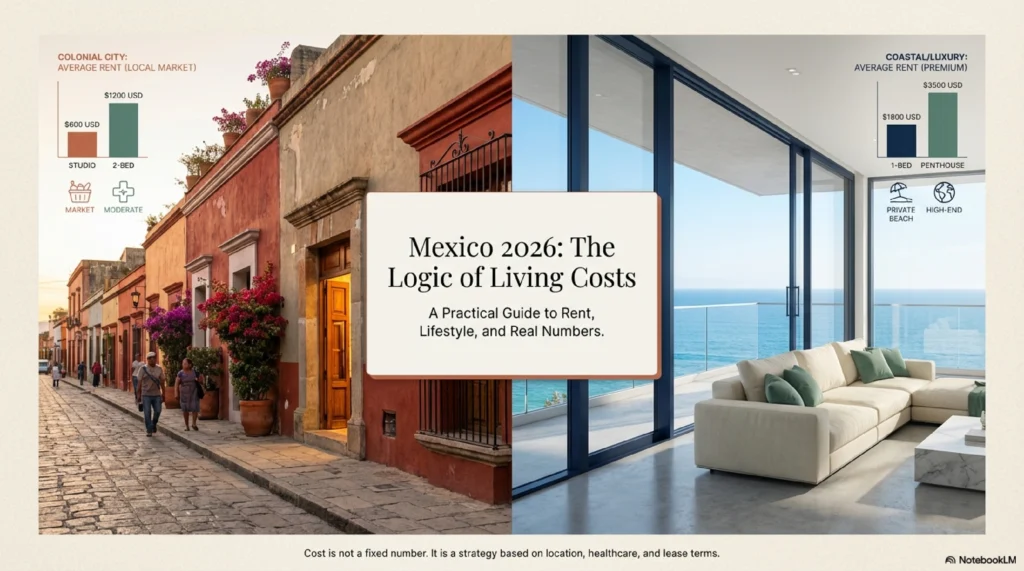
The cost of living in Mexico in 2026 depends mostly on where you rent, how you handle healthcare, and more importantly, whether you price your life using long-term local rates or short-term tourist rates. This guide breaks down real living expenses in Mexico with practical monthly numbers, city rent ranges, and budget scenarios for people planning to move, not just visit.
Average Monthly Cost of Living
in Mexico (2026 Numbers)
Most people want a single number for the average cost to live in Mexico. A better approach is to start with three realistic monthly ranges, then adjust for your city and housing strategy.
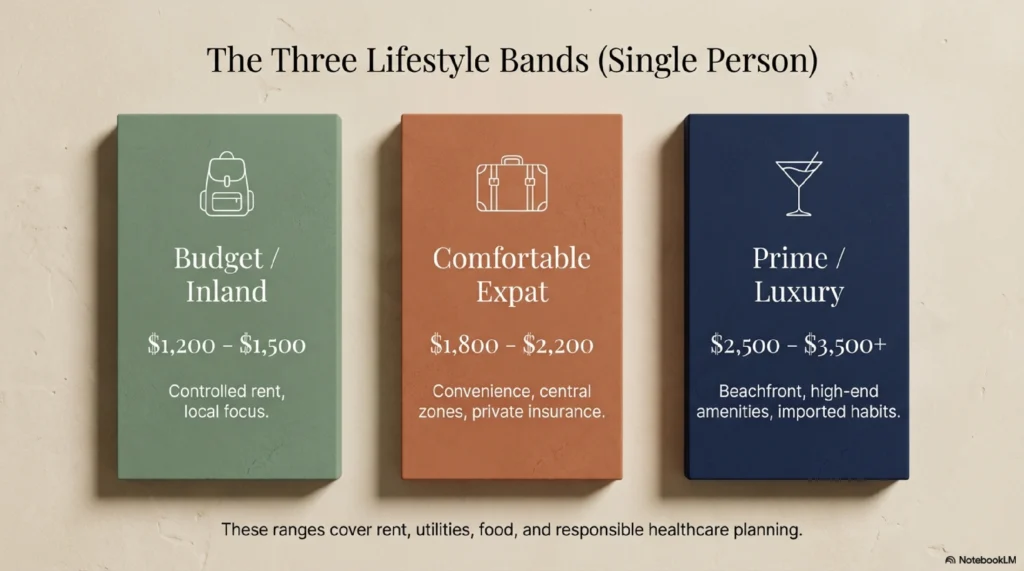
A single person living long term in 2026 usually lands in one of these bands.
A budget-focused lifestyle typically runs $1,200 to $1,500 per month.
A comfortable expat lifestyle typically runs $1,800 to $2,200 per month.
A prime-location beach or luxury lifestyle typically starts at $2,500 per month and can reach $3,500+.
These numbers are meant to reflect Mexico monthly expenses for someone renting a normal apartment, paying utilities, buying groceries, eating out sometimes, handling healthcare responsibly, and living day to day.
What actually drives Mexico cost per month
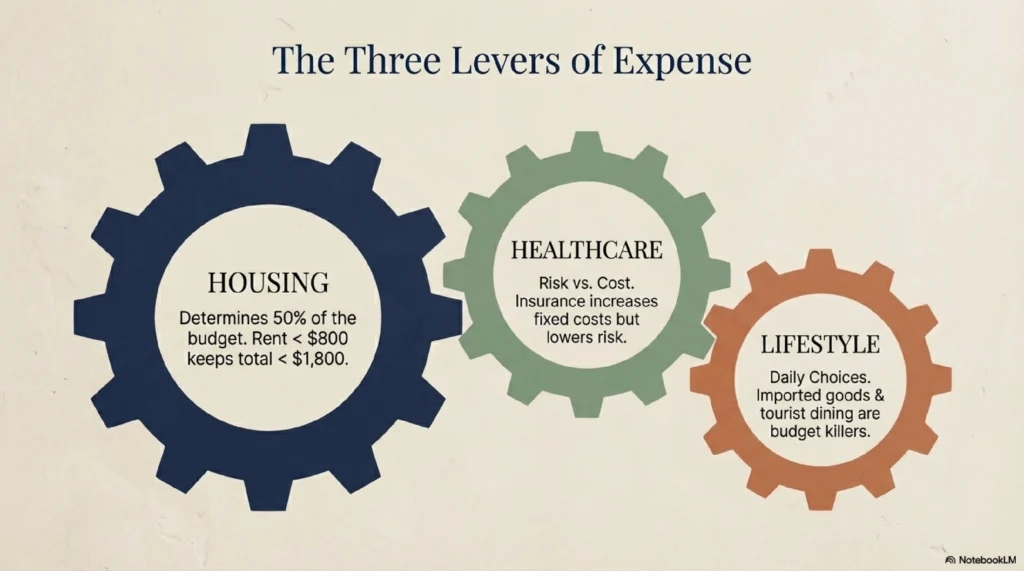
Housing is the main level. For example, If rent is under $800, many people can keep total expenses under $1,800.
Healthcare planning is the second lever. In addition, If you budget for private care and insurance, you reduce financial risk but increase monthly costs.
Finally, Lifestyle choices then shape the final number.
Imported groceries, frequent dining in tourist zones, and premium neighborhoods raise costs quickly.
A practical way to estimate your personal monthly number
Start with rent. Utilities come next. Food follows. Healthcare allocation must be included. Transportation and a buffer complete the structure.
If you try to reverse it by starting with an overall budget and hoping rent fits inside it, you usually end up with the wrong apartment and the wrong city.
Realistic monthly baseline math
If rent is $700, utilities are $110, groceries are $320, dining is $220, healthcare allocation is $200, and transport is $100, you are already at $1,650 before entertainment, travel, and irregular expenses.
If rent becomes $1,200 in a beach town, that exact same life becomes $2,150.
This is why “average” is less useful than “rent strategy.”
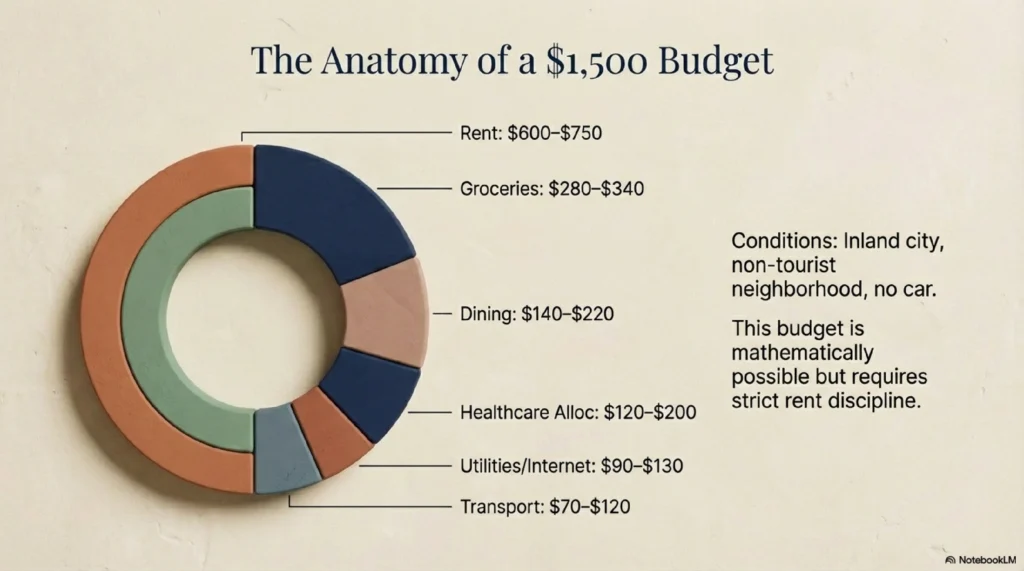
$1,500 budget example
| – | Estimated Monthly Cost (USD) |
|---|---|
| Rent | $600 to $750 |
| Utilities and Internet | $90 to $130 |
| Groceries | $280 to $340 |
| Dining Out | $140 to $220 |
| Healthcare Allocation | $120 to $200 |
| Transport | $70 to $120 |
| Buffer | $50 to $100 |
| Total Target Budget | Around $1,500 |
A $1,500 budget is realistic in many inland cities if housing stays controlled.
However, if rent rises above $900, a $1,500 monthly budget typically becomes tight.
$2,000 comfortable lifestyle example
A $2,000 lifestyle usually means you are buying convenience.
Rent is typically $850 to $1,200.
Dining out becomes more frequent.
Housing shifts to a more central neighborhood.
Private health insurance is maintained or a larger healthcare reserve is kept.
Rideshare services are used more often instead of public buses.
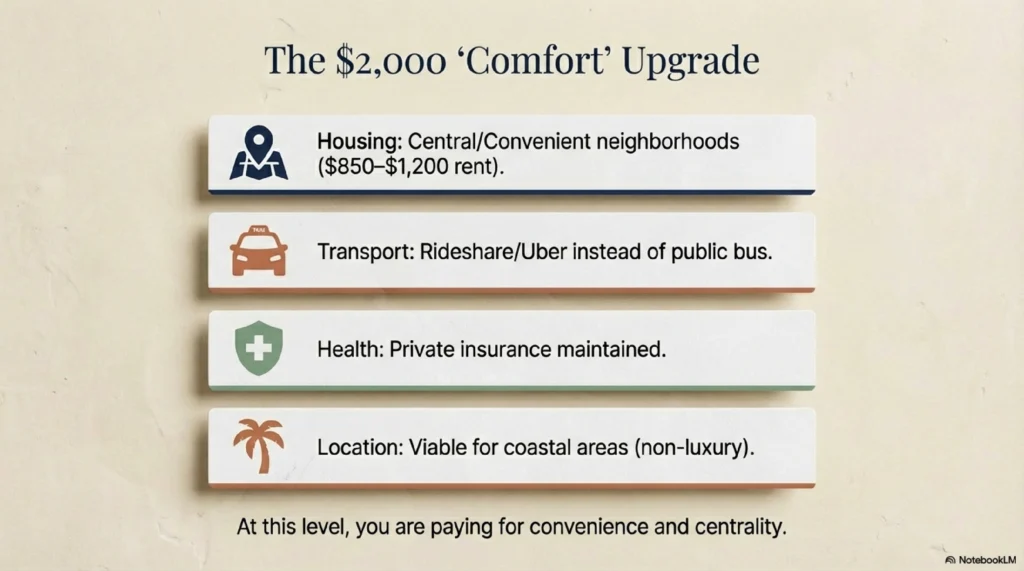
At this level, most people feel comfortable in many cities, including popular coastal areas, as long as rent does not drift into luxury pricing.
Rent Prices in Mexico by City
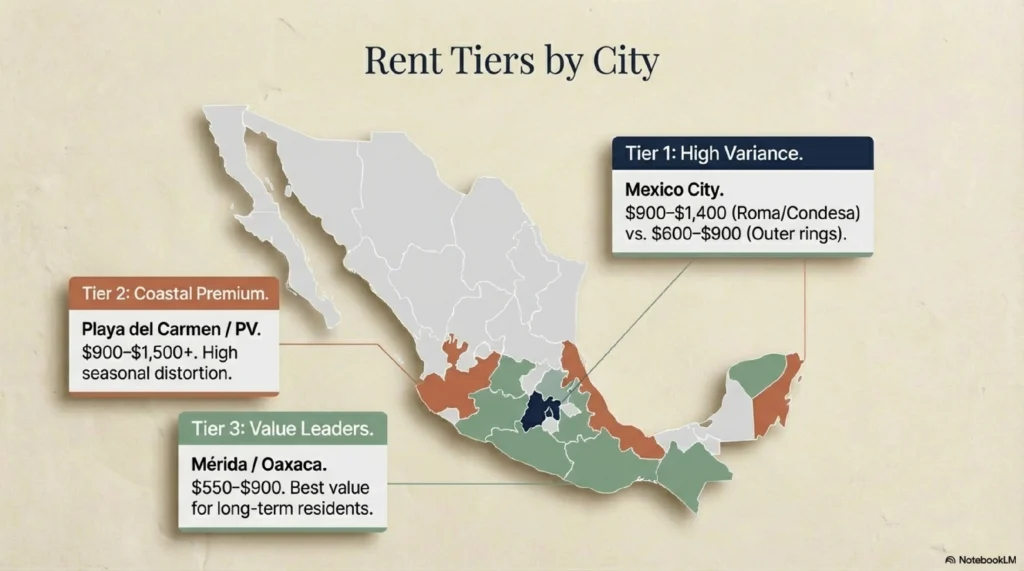
Rent is the biggest variable in the cost of living in Mexico. It also has the highest “tourist distortion,” meaning the price you see online is often not the long-term local price.
If you use Airbnb as your baseline, your math will be wrong.
If you use 6 to 12 month leases as your baseline, the numbers become predictable.
Mexico City
Mexico City has the widest range.
In central expat-friendly neighborhoods such as Roma, Condesa, Polanco, and Reforma, a furnished one-bedroom often falls in the $900 to $1,400 range.
High-end buildings with amenities can push above $1,500.
If you move a bit farther from the most famous zones, rent often drops into the $600 to $900 range for similar size apartments.
Mexico City is not cheap across the board. It is flexible if you choose neighborhoods based on budget, not trends.
Playa del Carmen
Playa del Carmen is a common relocation choice and a common budgeting mistake.
Modern one-bedroom apartments in convenient areas often land in the $900 to $1,500 range.
New luxury developments can exceed $1,800.
Tourism and seasonal demand hold prices up. If you choose Playa, your rent strategy matters more than your grocery strategy.
Puerto Vallarta
Puerto Vallarta sits in a similar pricing tier.
Standard one-bedroom rentals often fall in the $850 to $1,300 range.
Ocean views, new construction, and premium walkable zones push higher.
Mérida
Mérida remains one of the strongest value options for retirees and long-term residents.
Furnished one-bedrooms in safe neighborhoods often land in the $600 to $900 range.
You can find lower numbers outside premium expat areas, but you need to evaluate walkability and heat management because climate affects utilities.
Oaxaca
Oaxaca can be very workable for lower budgets.
Typical furnished one-bedroom pricing often falls in the $550 to $800 range.
The lease decision that changes your entire budget
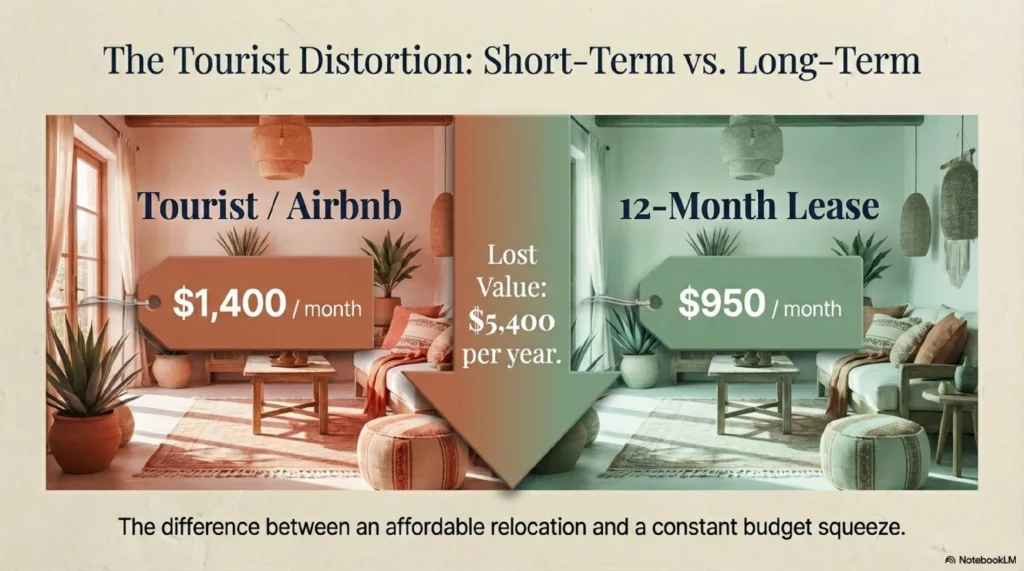
If you rent short term, you pay a premium.
Short-term pricing can be 30 to 60 percent higher than long-term leases.
A common pattern is a $1,400 monthly Airbnb rate for a unit that can rent for $950 on a 12-month lease.
That difference is $5,400 per year. It is the difference between an affordable relocation and a constant budget squeeze.
If you want a deeper structure and city-by-city rent logic, use rent in Mexico.
Utilities and Internet Costs in Mexico
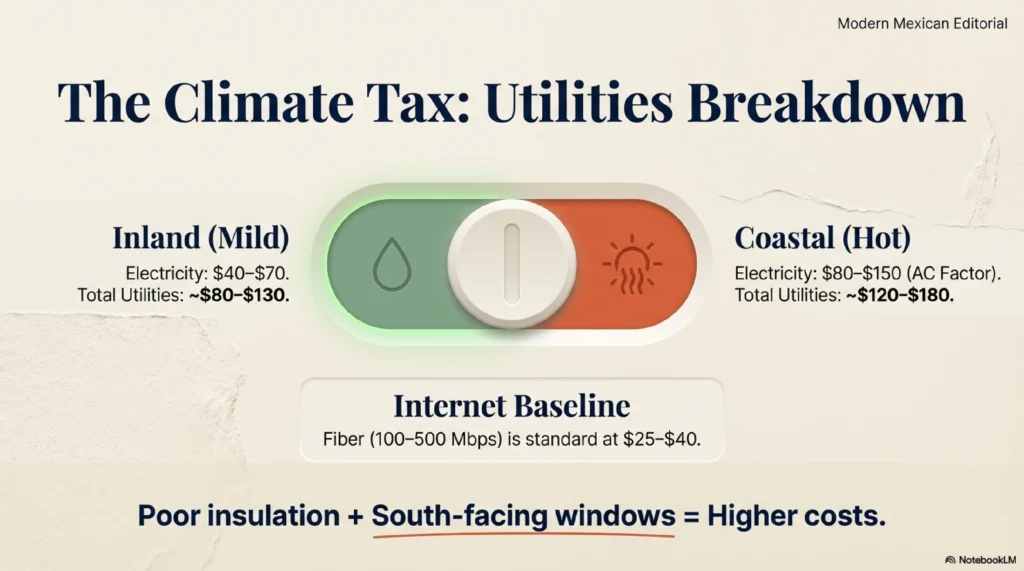
Utilities are usually affordable, but Mexico has a climate split.
In mild inland cities, utilities are predictable.
In hot coastal cities, electricity can become a major expense because of air conditioning.
Electricity
In moderate climates, many long-term residents see electricity in the $40 to $70 range.
In hot climates with daily air conditioning usage, electricity can rise into the $80 to $150 range.
Apartment choice matters. Poor insulation and large sun-facing windows increase costs.
If you are trying to keep Mexico monthly expenses stable, do not rent a unit that requires constant AC to be livable.
Water and gas
Water is commonly in the $10 to $25 range.
Cooking gas often lands in the $15 to $30 range depending on cooking habits and hot water systems.
Internet
Internet quality is strong in many Mexican cities.
Fiber plans commonly cost $25 to $40 per month and often provide 100 to 500 Mbps.
If you work remotely, add a backup data plan so a single outage does not become a work emergency.
Real-world combined utility range
In most inland cities, combined utilities and internet typically land around $80 to $130 per month.
In coastal areas in peak heat seasons, combined costs can rise to $120 to $180.
Utilities are not usually what makes Mexico expensive. Rent and lifestyle are.
Grocery and Food Expenses
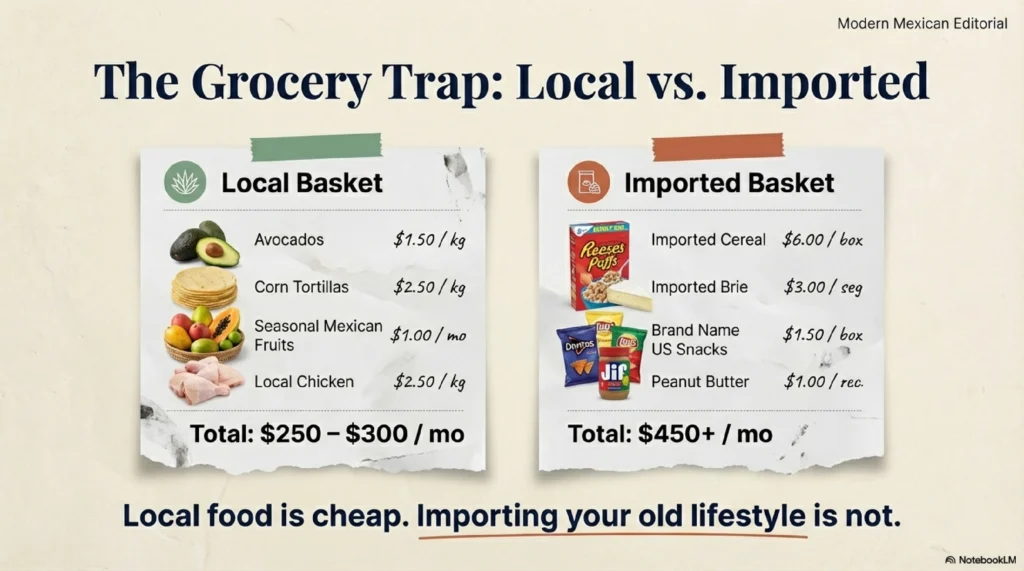
Food is one of Mexico’s strongest value categories, but it is also where expats accidentally recreate U.S. pricing by buying imported habits.
Groceries
Shopping primarily at local markets and relying on local staples keeps monthly grocery spending around $250 to $300 for many people.
Mixing local markets with imported products typically raises budgets to the $300 to $400 range.
Heavy purchases of imported cereal, specialty cheeses, protein bars, and U.S. snack brands can push grocery spending beyond $450 per month.
This is the cleanest truth about food in Mexico.
Local food is cheap.
Imported lifestyle is not.
Dining out
Eating out is affordable compared to the U.S., but frequency controls the cost.
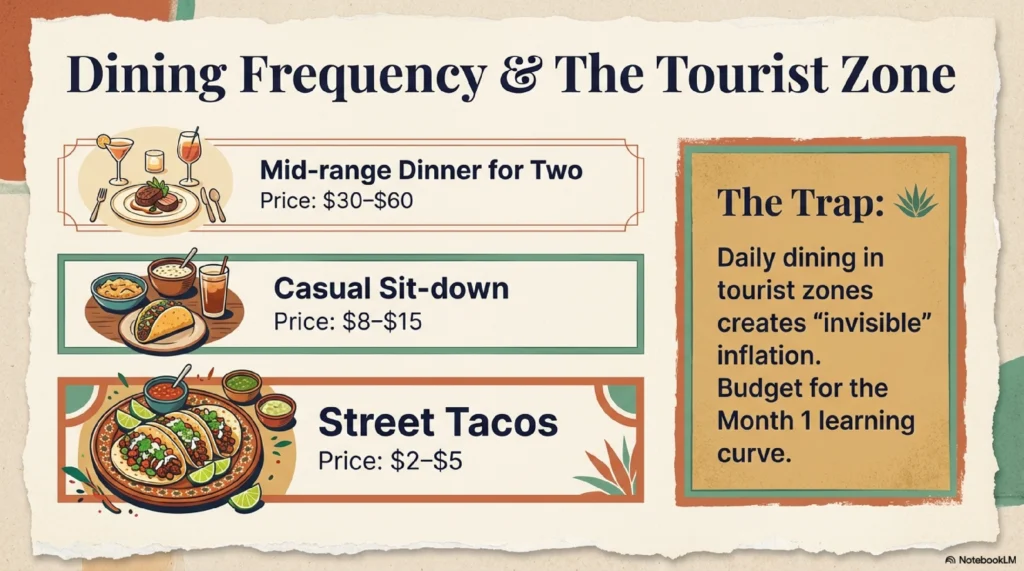
Street tacos often cost $2 to $5.
Casual restaurants commonly fall in the $8 to $15 range per meal.
A mid-range dinner for two often lands around $30 to $60.
If you eat out a few times per week, it stays manageable.
If you eat out daily in tourist zones, you add several hundred dollars to your monthly expenses without noticing because each meal still feels “cheap” compared to the U.S.
A relocation-specific food tip
During your first month, you will likely overspend on restaurants because you are still learning where to shop and how to cook locally.
Plan for that. Do not panic if Month 1 food spending is higher.
Month 2 is when your food budget usually stabilizes.
Healthcare Costs
in Mexico for Expats
Healthcare is one of the biggest reasons Mexico is financially attractive for long-term residents.
Private healthcare pricing is dramatically lower than the U.S., and access is often faster.
Typical private healthcare pricing
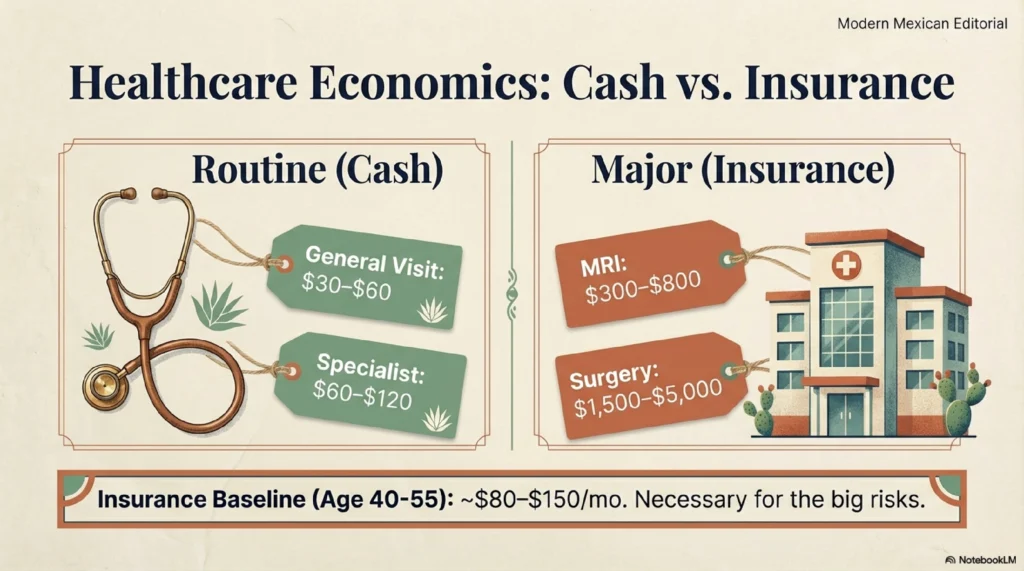
General doctor visits often land in the $30 to $60 range.
Specialist visits often land in the $60 to $120 range.
MRI pricing often falls in the $300 to $800 range.
Private hospital nights often land in the $200 to $500 range.
Minor surgeries often fall in the $1,500 to $5,000 range.
Those numbers are why Mexico works financially for many retirees.
Insurance versus self-pay
Some expats rely on self-pay because routine care is affordable.
That approach can work for routine visits.
It becomes risky for surgery, hospitalization, and chronic issues.
Many newcomers use international medical insurance during the transition phase, especially if they want coverage while learning the local system.
VisitorsCoverage is one of the most practical options Americans use for international health coverage in Mexico. Plans start around $80 per month, you get covered fast, and the whole process takes minutes online. If you are moving without a clear healthcare plan yet, this is the place to start before your first month in country leaves you exposed.
Typical insurance cost range
For ages 40 to 55, many plans fall around $80 to $150 per month.
For ages 60 to 70, many plans fall around $150 to $350 per month.
Your real number depends on age, coverage level, and underwriting.
A relocation-specific healthcare tip
Budget for your first year to be higher.
You will likely pay for initial checkups, dental, prescriptions, and “setup” appointments you postponed in the U.S.
Healthcare in Mexico is cheaper, but the first year often includes extra catching up.
Transportation Costs
in Mexico
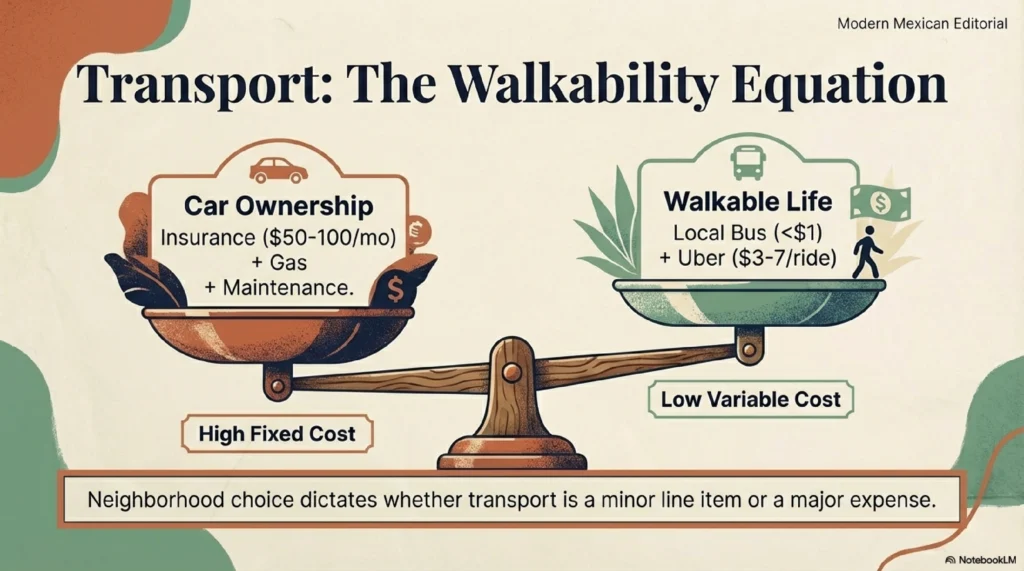
Transportation costs can be low in Mexico, especially if you choose a walkable neighborhood.
This is why neighborhood selection matters.
If you can walk to groceries, cafes, and daily errands, transportation becomes a minor line item.
Public transport
Local buses are typically under $1.
Mexico City metro rides are typically under $0.50.
Large cities often have robust public networks.
Rideshare
Uber and similar services are widely available.
Short rides often land around $3 to $7.
Airport rides often land around $15 to $30 depending on the city.
Many expats rely on rideshare and avoid owning a car.
Car ownership
Owning a car adds insurance, fuel, and maintenance.
Insurance often lands around $50 to $100 per month depending on location and coverage.
Fuel and maintenance are typically cheaper than U.S. equivalents, but the car still raises your monthly baseline.
In many cities, the best financial move is to rent where you do not need a car.
Cheapest Cities in Mexico for Expats
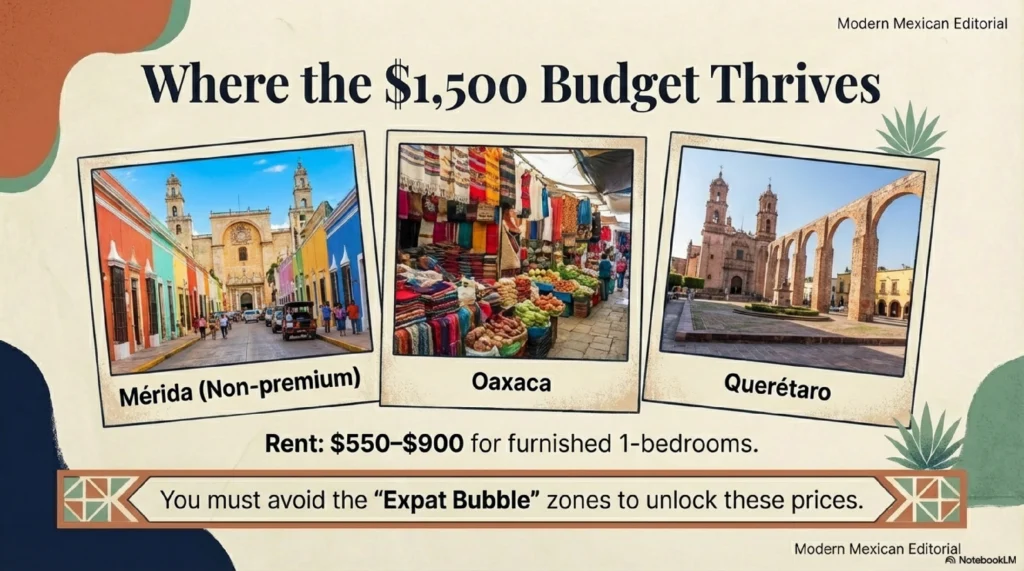
If your priority is reducing the average cost to live in Mexico, inland cities usually provide the best value.
Mérida outside premium expat neighborhoods can offer strong rent value.
Oaxaca can be workable for lower monthly budgets.
Querétaro can be cost-effective in select districts.
Guadalajara can offer value if you avoid luxury zones.
In these cities, a furnished one-bedroom can often fall in the $550 to $900 range, utilities are more stable, and daily life costs less.
If you want a focused shortlist and the tradeoffs behind each city, use cheapest cities in Mexico FULL GUIDE.
Retirement Budget in Mexico (Real Scenarios)
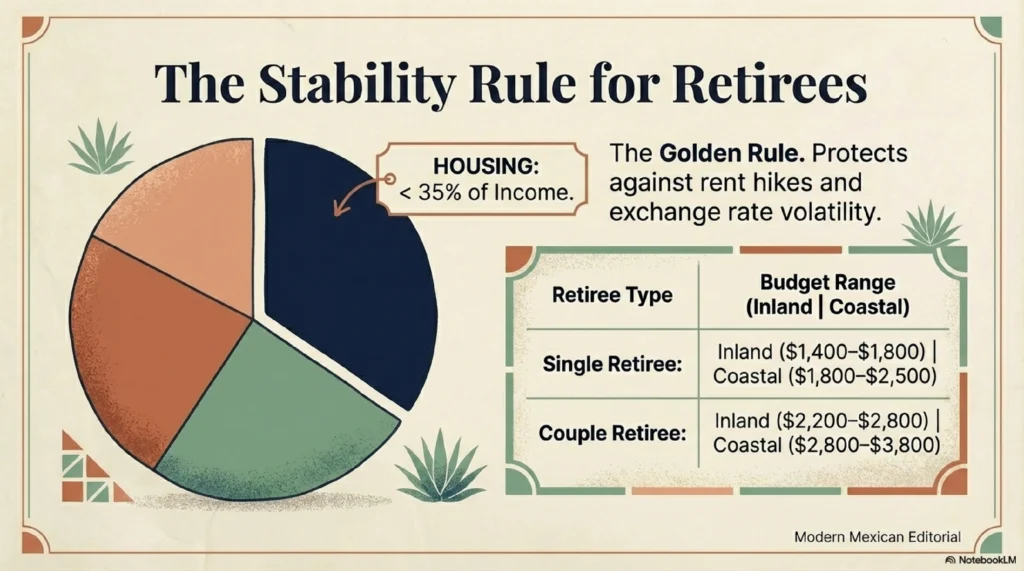
Retirement budgeting is not only about today’s costs.
It is about whether the plan stays stable when rent rises, when exchange rates move, and when healthcare needs increase.
Single retiree range
In inland cities, many retirees live comfortably around $1,400 to $1,800 per month.
In coastal cities, many retirees need $1,800 to $2,500 per month.
Couple range
Inland couples often land around $2,200 to $2,800 per month.
Coastal couples often land around $2,800 to $3,800 per month.
The retirement rule that keeps plans stable
Keep housing under 35 percent of total monthly income when possible.
If rent consumes half your income, your plan becomes vulnerable to rent increases and currency shifts.
One of the easiest ways to protect that margin is to stop losing money on currency conversion. Most expats in Mexico switch to Wise within the first few months, it converts USD to pesos at the real exchange rate, with no markup. On a $2,000 monthly budget, that difference adds up faster than most people expect.
Visa and residency costs
If you are budgeting a move, include legal and residency costs, deposits, and setup fees.
For the compliance side, see Mexico retirement visa cost FULL GUIDE.
Can You Live in Mexico on $1,500?
Yes, but only under conditions that keep rent controlled.
A $1,500 monthly budget works best in inland cities and non-tourist neighborhoods.
It works best when you choose a walkable area and avoid car ownership.
It works best when rent stays around $600 to $750.
If you try to do $1,500 in a premium beach zone with rent above $1,000, it usually becomes stressful.
Rent discipline is the deciding factor.
Frequently Asked Questions
What is the cost of living in Mexico per month for a single person?
Most single long-term residents land between $1,200 and $2,200.
The lower end is realistic in inland cities with controlled rent.
The higher end is common in beach towns and premium neighborhoods.
What are typical living expenses in Mexico for a couple?
Many couples spend $2,200 to $3,800 depending on rent and lifestyle.
Housing is the main shared advantage.
Dining, travel, and healthcare choices then shape the final number.
What is the average cost to live in Mexico comfortably?
A comfortable lifestyle for many expats starts around $1,800 to $2,200.
That range usually includes a good neighborhood, regular dining, and planned healthcare.
How much does it cost to live in Mexico in a beach city?
Beach cities often require higher rent.
Many people spend $1,900 to $2,800 in places like Playa del Carmen or Puerto Vallarta depending on apartment choice.
Short-term rental pricing can push costs higher.
What is a realistic Mexico monthly expenses budget if you want private healthcare?
Budget at least $150 to $350 per month for insurance or a healthcare reserve depending on age.
Routine care is affordable, but hospitalization is where insurance becomes valuable.
Is Mexico still cheaper than the United States in 2026?
Often yes.
The biggest savings usually come from housing and healthcare.
The gap shrinks if you choose luxury buildings, imported grocery habits, and high-tourism neighborhoods.
Can you live in Mexico on $1,500 a month long term?
Yes in many inland cities if rent stays controlled.
It becomes difficult in premium beach zones unless you find below-market housing.
The deciding factor is almost always rent.
What is the best way to lower your Mexico cost per month without sacrificing quality?
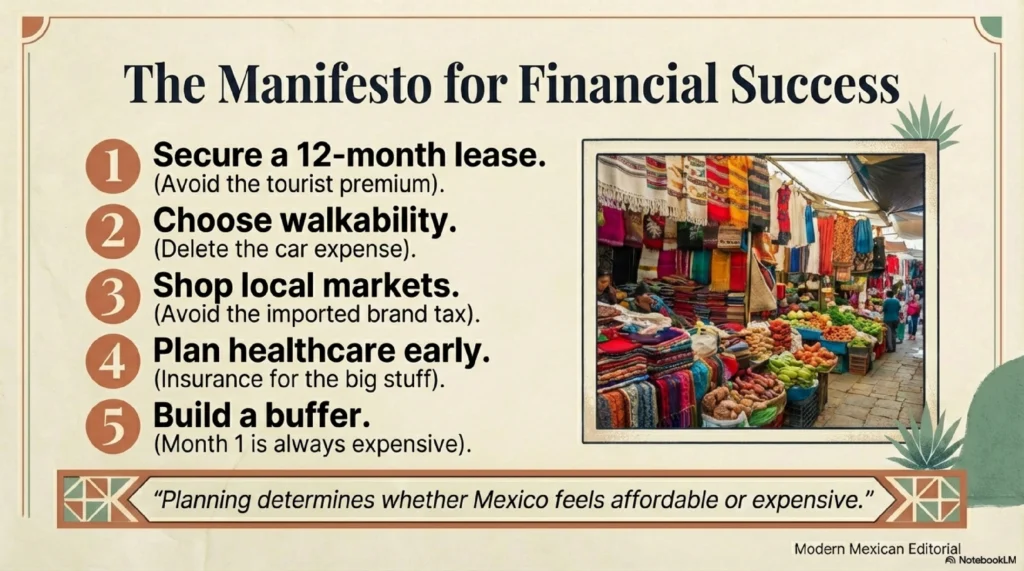
Choose a walkable neighborhood.
Shop local markets.
Keep imported habits limited.
Plan healthcare early.
Avoid short-term pricing as your baseline.
What costs do people miss when moving to Mexico?
Security deposits and first-month setup costs are common.
Many renters pay one to two months deposit.
New arrivals often spend more in Month 1 on dining, taxis, and setup purchases.
Planning a buffer prevents stress.
Where should I start if I am relocating and want the numbers to be accurate?
Start with housing and city selection.
Then build a monthly budget around rent.
For deeper planning, use monthly budget in Mexico and rent in Mexico to avoid short-term pricing traps.
The cost of living in Mexico is not one fixed number.
It is a housing decision, a healthcare decision, and a lifestyle decision.
Planning determines whether Mexico feels affordable or expensive.
note: Broader cost data referenced in this guide aligns with publicly available data from sources such as INEGI (Mexico’s National Institute of Statistics and Geography), OECD cost indicators, and international living cost databases like Numbeo.