

A realistic monthly budget in Mexico is built from the ground up, not from averages. Your real Mexico monthly expenses depend on rent first, then healthcare structure, then daily lifestyle habits. Everything else adjusts around those three variables, which ultimately determine your true cost to live in Mexico per month.

Many Americans researching relocation ask one question: what is the real cost to live in Mexico per month? The honest answer is not a single number. It is a range shaped by city, lease strategy, healthcare planning, and how disciplined you are with housing. That discipline directly impacts your long-term Mexico cost breakdown.
This guide provides a detailed Mexico cost breakdown across three practical tiers: $1,500, $2,000, and $3,000+. It is written for Americans planning long‑term relocation, not short‑term travel, and focuses specifically on structuring a sustainable monthly budget in Mexico.
For the full picture, read our detailed cost of living in Mexico guide.
Broader cost data referenced in this guide aligns with publicly available data from sources such as INEGI (Mexico’s National Institute of Statistics and Geography), OECD cost indicators, and international living cost databases like Numbeo.
Basic $1,500 Budget Scenario
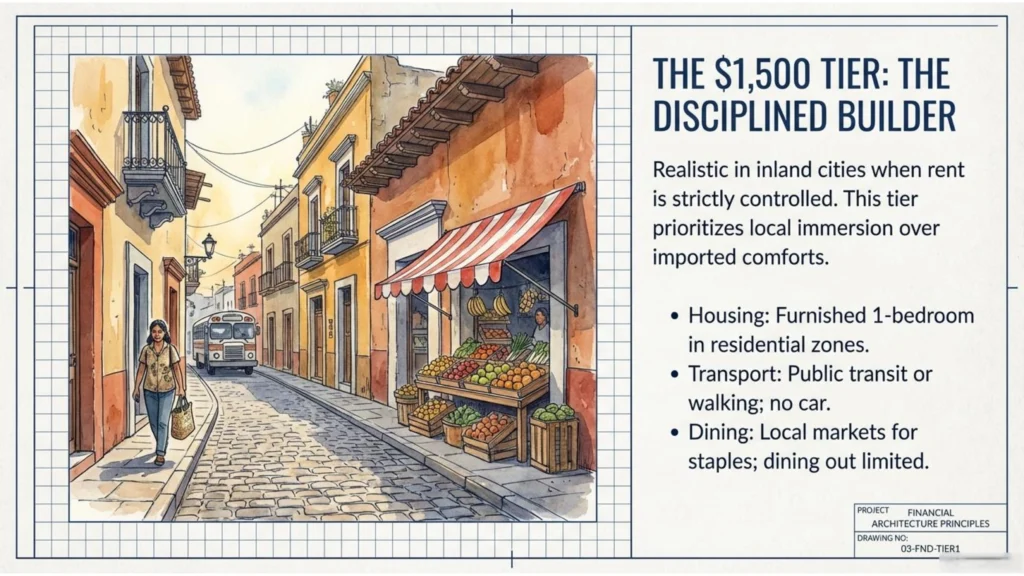
A $1,500 monthly budget in Mexico is realistic in many inland cities when rent stays controlled.
This tier works best when housing remains under $750 and lifestyle expectations are moderate rather than aspirational.
At this level, controlling rent protects your overall Mexico monthly expenses.
National rental and inflation trends can be reviewed through INEGI housing data and Banco de México inflation reports, which help explain why certain regions experience faster rent growth than others.
What this lifestyle actually looks like
A furnished one-bedroom in a residential, non-tourist neighborhood. Long-term lease instead of short-term rental.
Local markets for produce and staples.
Dining out a few times per week, not daily. Public transportation or a walkable neighborhood that removes the need for a car.
Basic private health insurance or a structured healthcare reserve.
For Americans at this budget tier, VisitorsCoverage offers flexible health plans that fit a leaner monthly structure without locking you into expensive long-term contracts.
Each of these decisions keeps your cost to live in Mexico per month within range.
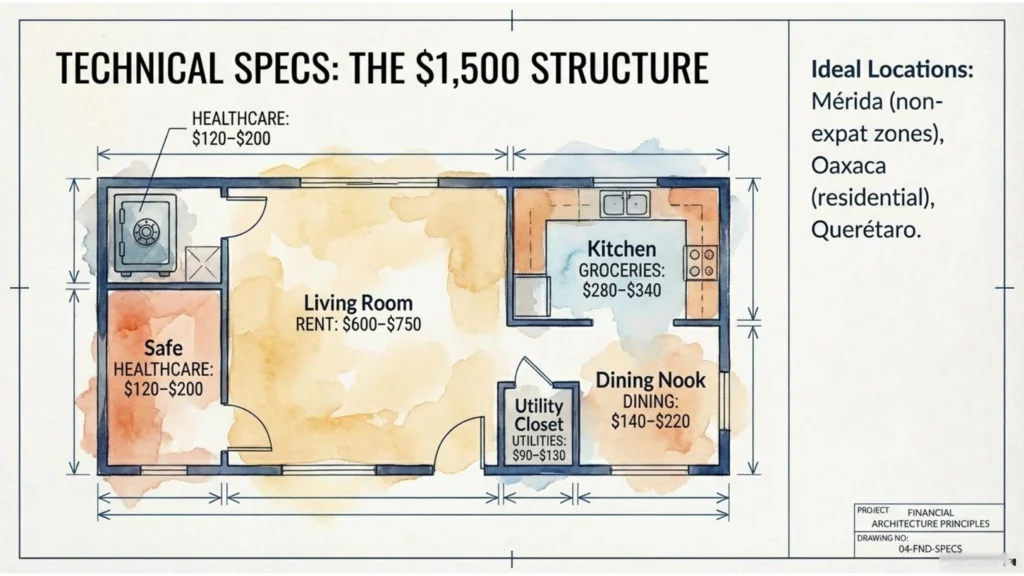
Mexico cost breakdown at $1,500
| – | Estimated Monthly Cost (USD) |
|---|---|
| Rent | $600 to $750 |
| Utilities and Internet | $90 to $130 |
| Groceries | $280 to $340 |
| Dining | $140 to $220 |
| Healthcare Allocation | $120 to $200 |
| Transportation | $70 to $120 |
| Buffer | $50 to $100 |
| Total Target | Around $1,500 |
If rent rises above $900, the structure tightens quickly and margin disappears.
The key insight for a $1,500 budget to live in Mexico is that rent discipline determines success more than grocery optimization.
In other words, housing determines the stability of your entire monthly budget in Mexico.
Where this tier works best
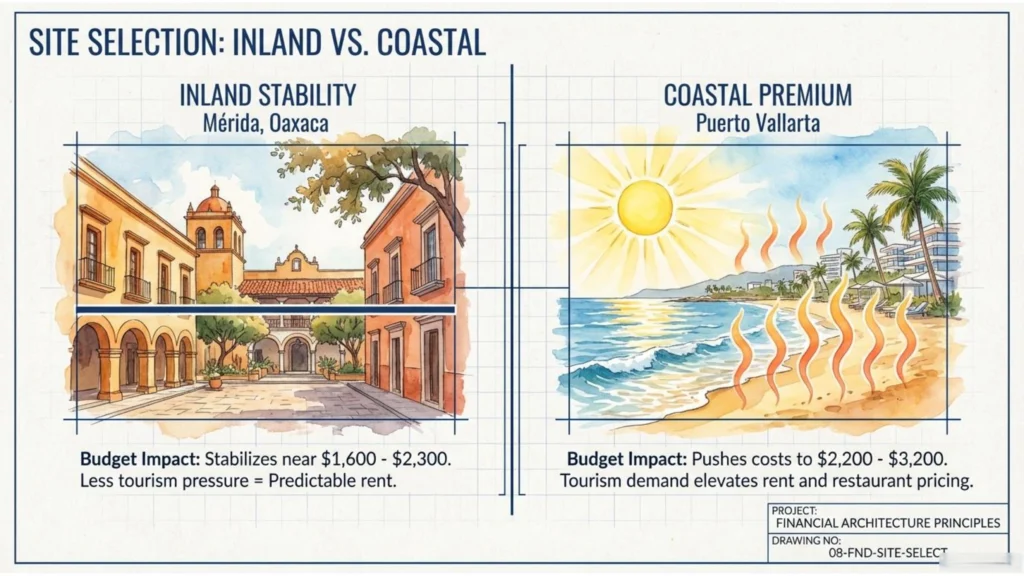
Mérida outside premium expat zones. Oaxaca residential districts. Querétaro in non-luxury neighborhoods.
Secondary zones in larger metros where pricing reflects local income rather than tourism demand.
For a ranked breakdown of the most affordable cities and what each one costs long term, see cheapest cities in Mexico guide.
Before committing to housing, analyze average rent in Mexico by city and neighborhood tier to avoid distorting your projected Mexico monthly expenses.
$2,000 Mid-Range Lifestyle
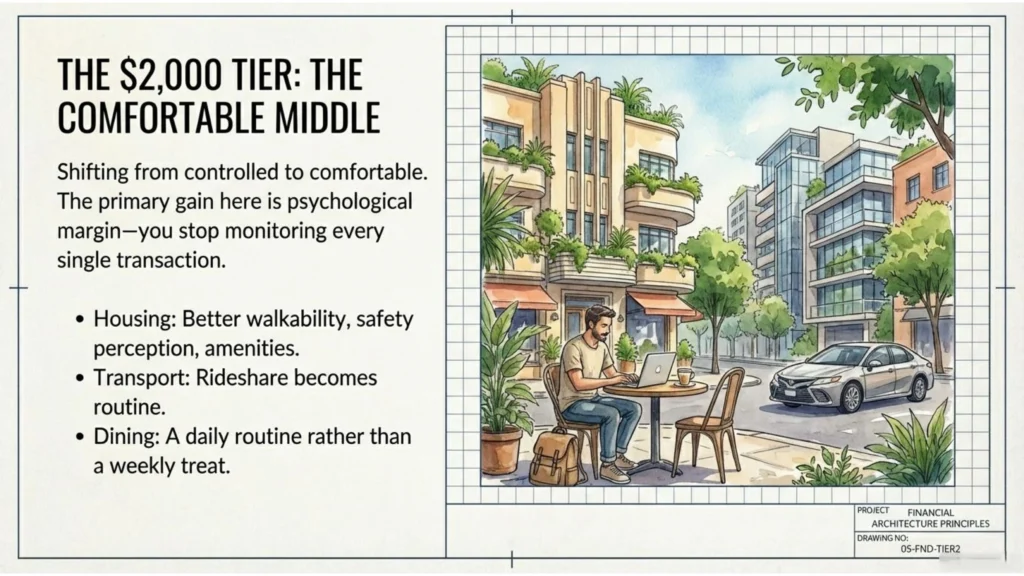
At $2,000 per month, your monthly budget in Mexico shifts from controlled to comfortable.
This is where many American expats land because it balances cost efficiency with convenience while keeping the overall cost to live in Mexico per month manageable.
What changes at this tier
Rent typically ranges from $850 to $1,200.
Neighborhood quality improves in terms of walkability, safety perception, and amenities.
Dining becomes routine rather than limited. Healthcare planning often includes stronger private coverage instead of minimal reserve strategies.
Rideshare becomes common instead of relying entirely on public transit. These adjustments increase Mexico monthly expenses, but they also increase quality of life.
Mexico monthly expenses logic at $2,000
The increase from $1,500 to $2,000 is driven primarily by housing and lifestyle flexibility.
Groceries increase modestly. Utilities stay similar unless relocating to hotter coastal areas. Healthcare allocation rises for broader coverage. The real difference is psychological margin.
You are not monitoring every category weekly, which reduces stress inside your structured Mexico cost breakdown.
Practical monthly example
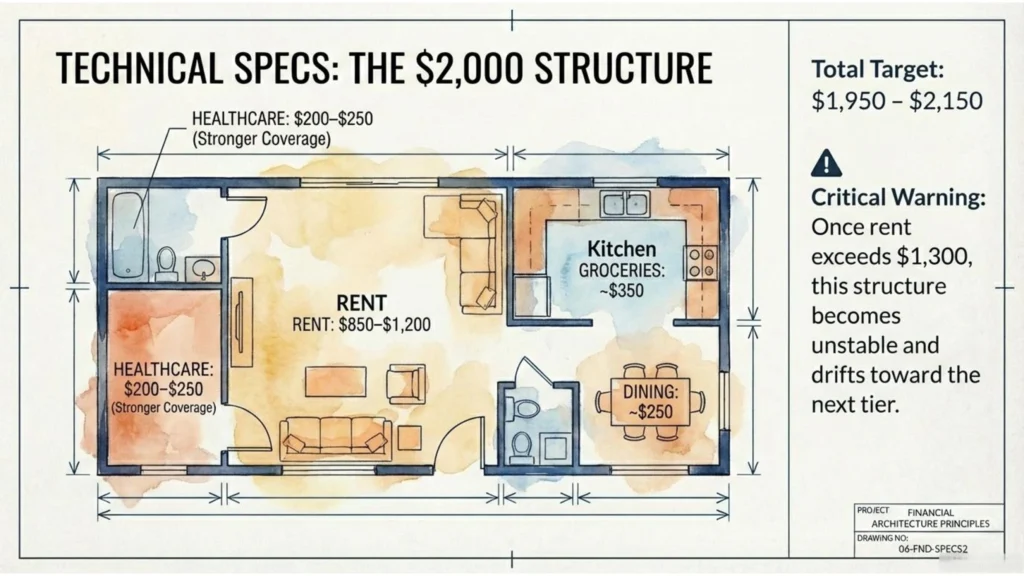
| – | Estimated Monthly Cost (USD) |
|---|---|
| Rent | ~$950 |
| Utilities | ~$120 |
| Groceries | ~$350 |
| Dining | ~$250 |
| Healthcare | $200–$250 |
| Transportation | ~$120 |
| Miscellaneous | $100–$150 |
| Estimated Total | $1,950–$2,150 |
This cost to live in Mexico per month range works in many neighborhoods in Mexico City, Puerto Vallarta, Playa del Carmen, and Guadalajara when rent stays below luxury thresholds. City-level pricing patterns align with data from sources such as Numbeo and OECD regional purchasing power comparisons.
If rent rises above $1,300, this tier typically shifts toward $2,300+, expanding the overall Mexico cost breakdown.
$3,000+ Comfortable Expat Life

A $3,000 monthly budget in Mexico supports lifestyle choice rather than financial constraint.
This level is not about survival. It is about preference, flexibility, and protecting margin within your total Mexico monthly expenses.
What this tier includes
Modern two-bedroom apartment in a prime or near-prime neighborhood. Walkable access to cafes, gyms, coworking spaces, and restaurants. Frequent restaurant dining without tracking totals weekly. Comprehensive private health insurance coverage. Regular domestic travel within Mexico. Lifestyle spending for hobbies, fitness, and entertainment. At this level, the cost to live in Mexico per month reflects lifestyle priorities rather than strict budgeting.
Mexico cost breakdown at $3,000+
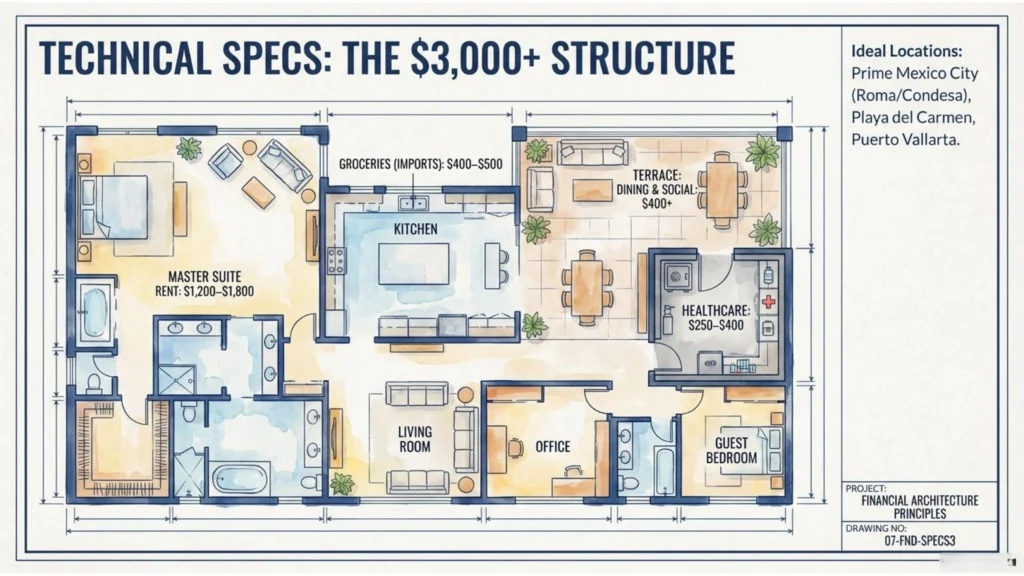
Rent typically falls between $1,200 and $1,800 depending on city and building quality.
Groceries often range from $400 to $500 if imported products are included.
Dining may exceed $400 with active social habits.
Healthcare insurance commonly ranges from $250 to $400 depending on age.
Utilities remain manageable unless living in high-air-conditioning coastal properties.
Transportation costs remain modest unless car ownership is added.
Together, these define a higher-tier Mexico cost breakdown. Healthcare pricing comparisons are broadly consistent with World Health Organization expenditure data and OECD health cost comparisons, which show Mexico’s private care costs significantly below U.S. averages.
Where this tier works comfortably
Prime Mexico City neighborhoods such as Roma or Condesa.
High-demand beach cities such as Playa del Carmen and Puerto Vallarta.
Newer developments offering amenities like pools, gyms, and 24-hour security. At this level, financial stress from daily spending is largely removed. However, housing still drives the total.
A $2,000 rent combined with lifestyle drift can push total monthly expenses beyond $3,500 quickly, reshaping your total cost to live in Mexico per month.
The foundation of every monthly budget in Mexico remains rent. Control rent and Mexico remains financially efficient. Allow housing to exceed income ratios and even a $3,000 plan can compress your overall Mexico monthly expenses.
City Cost Comparison
Your Mexico monthly expenses vary significantly by geography. Below is a realistic comparison for a comfortable single-person lifestyle and projected cost to live in Mexico per month by location.
| City | Estimated Comfortable Monthly Budget |
|---|---|
| Mexico City (central zones) | $2,000 to $2,800 |
| Playa del Carmen | $2,200 to $3,200 |
| Puerto Vallarta | $2,000 to $3,000 |
| Mérida | $1,600 to $2,200 |
| Oaxaca | $1,500 to $2,000 |
| Querétaro | $1,700 to $2,300 |
Why beach cities cost more
Tourism demand elevates rent. Imported goods are more common. Restaurant pricing reflects visitor demand.
Electricity usage increases in hot climates. Each factor expands the total Mexico cost breakdown.
Why inland cities stabilize budgets
Less tourism pressure keeps rent predictable.
Local markets dominate grocery spending.
Dining reflects local demand rather than seasonal tourism.
If long-term sustainability is your priority, inland cities often produce a more stable and predictable monthly budget in Mexico.
Regional income and cost distribution patterns can be cross-checked through INEGI regional income statistics and World Bank economic data for Mexico.
Couple vs Single Detailed Comparison
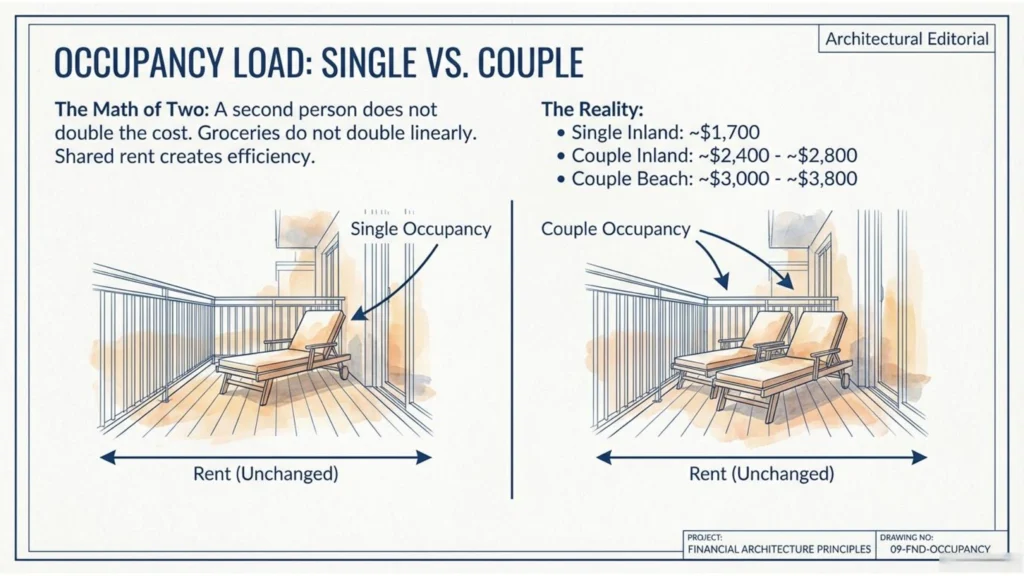
Your monthly budget in Mexico changes meaningfully depending on whether you are relocating alone or as a couple.
While two people do not double total expenses, housing size, healthcare coverage, and dining frequency typically increase overall Mexico monthly expenses.
Single Person Budget Structure
A single person can live efficiently in a one-bedroom apartment and keep rent in the $600 to $1,000 range depending on city.
Utilities remain moderate because space is smaller.
Grocery spending is easier to control.
Transportation may be minimal in walkable areas. In inland cities, many singles stabilize between $1,400 and $2,000 per month, defining a moderate cost to live in Mexico per month.
In beach cities, singles often range between $1,900 and $2,800 depending on rent and lifestyle.
Couple Budget Structure
Couples benefit from shared rent, but often upgrade to a larger apartment or better neighborhood.
A two-bedroom in the same city can increase rent by $200 to $600 compared to a one-bedroom.
Utilities rise moderately because of larger space and higher usage. Groceries increase, but not linearly.
Two people do not spend exactly double on food due to shared cooking. Healthcare insurance costs typically double unless one partner remains on external coverage.
Transportation may remain similar if both work remotely and live centrally. However, if a car is added, overall monthly expenses increase quickly, altering the overall Mexico cost breakdown.
Realistic Couple vs Single Comparison
Single inland lifestyle often stabilizes near $1,700.
Couple inland lifestyle often stabilizes near $2,400 to $2,800.
Single beach lifestyle often stabilizes near $2,300.
Couple beach lifestyle often stabilizes between $3,000 and $3,800 depending on housing and dining habits.
The key difference is housing tier selection. When couples choose premium neighborhoods, the Mexico cost breakdown shifts upward more than groceries or utilities alone would suggest, directly affecting the total monthly budget in Mexico.
Hidden Costs Most People Miss
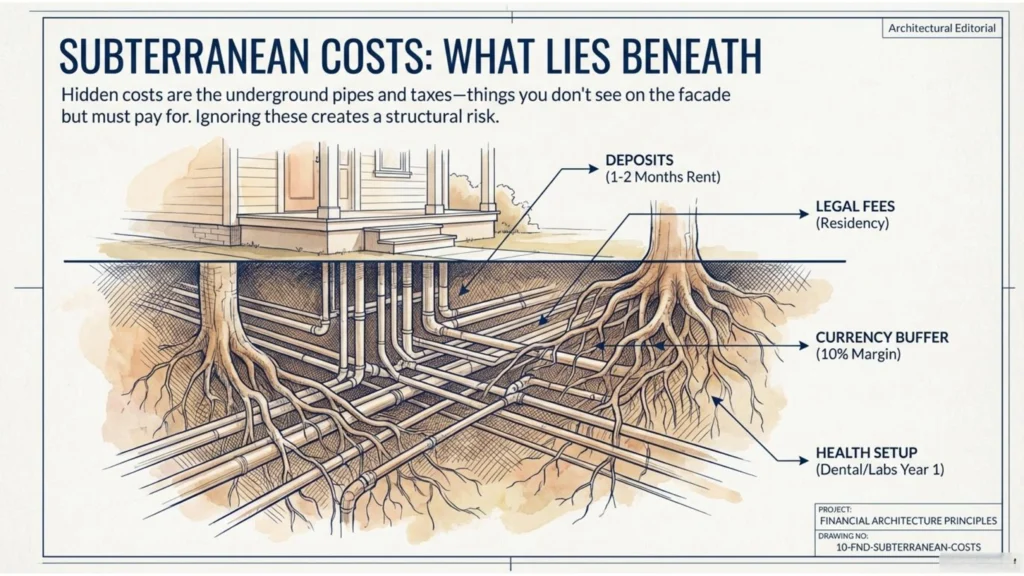
A realistic cost to live in Mexico per month includes more than rent and groceries.
Hidden costs are often what destabilize a carefully planned monthly budget in Mexico.
Security Deposits and Setup
Many landlords require one to two months of rent as deposit.
If monthly rent is $1,000, your upfront housing cost can easily exceed $2,500 including first month payment.
Furniture purchases, kitchen supplies, and basic household items can add another $500 to $1,500 depending on what is included in the rental. These one-time expenses influence your first-year Mexico cost breakdown.
Residency and Legal Fees
Temporary or permanent residency applications involve government fees and often attorney assistance. These one-time expenses can range from several hundred to several thousand dollars depending on complexity. Ignoring these costs creates a misleading projection of your real Mexico monthly expenses.
For a full breakdown of application fees, timelines, and what to budget for, see Mexico retirement visa cost full guide.
Health Setup Year
The first year in Mexico often includes higher medical spending. New arrivals schedule dental visits, checkups, lab work, and preventive care they may have postponed previously. While healthcare is affordable, the first year frequently exceeds steady-state monthly estimates and temporarily increases your cost to live in Mexico per month.
Currency Movement
If income is earned in USD and expenses are paid in pesos, exchange rate movement directly affects Mexico monthly expenses.
A weaker dollar increases effective monthly costs without changing lifestyle. A stronger dollar creates margin.
Long-term relocation planning should include a currency buffer of at least ten percent to protect your structured monthly budget in Mexico.
Most expats managing USD income against peso expenses use Wise to convert at real exchange rates each month. It does not eliminate currency risk, but it removes the bank markup that quietly adds to your monthly total.
Exchange rate volatility data can be verified through Banco de México historical currency reports and IMF exchange rate databases.
Lifestyle Drift
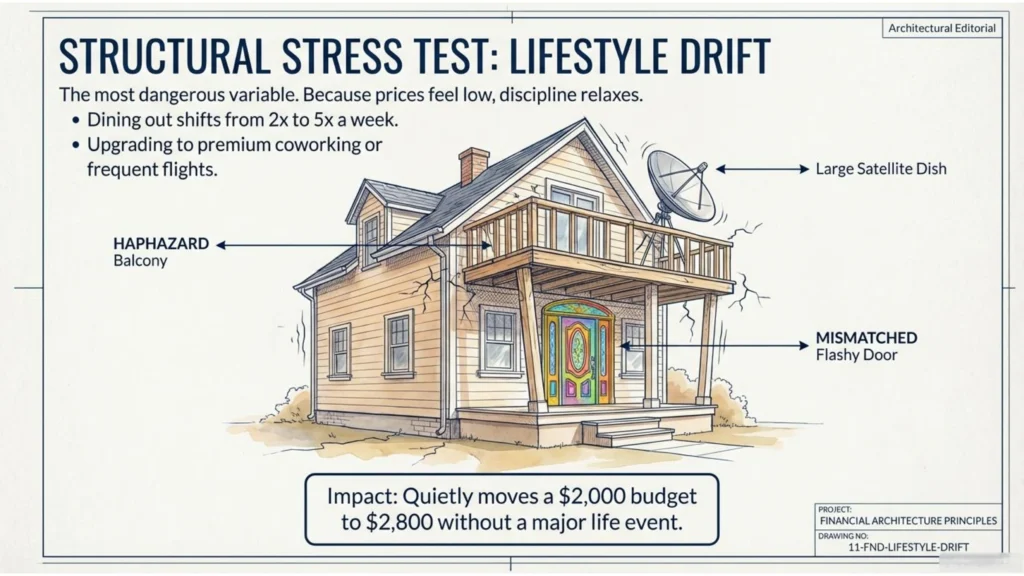
The most underestimated hidden cost is lifestyle drift.
Dining out more frequently because prices feel low.
Choosing premium coworking spaces.
Taking frequent domestic flights. Upgrading apartments after the first year.
These shifts quietly move a $2,000 monthly budget toward $2,800 without a major lifestyle change. Recognizing hidden costs early produces a more accurate and sustainable Mexico cost breakdown.
Frequently Asked Questions
What is a realistic monthly budget in Mexico for Americans?
A realistic monthly budget in Mexico for Americans typically ranges between $1,500 and $2,500 depending on city and housing strategy.
What are typical Mexico monthly expenses for one person?
Typical Mexico monthly expenses include rent, utilities, groceries, dining, healthcare allocation, transportation, and savings buffer. Inland cities often land between $1,400 and $2,000, while beach cities often range from $1,900 to $3,000.
What is the cost to live in Mexico per month with private healthcare?
When including private insurance, many budgets require an additional $150 to $350 monthly depending on age and coverage, increasing the total cost to live in Mexico per month.
What is the minimum budget to live in Mexico comfortably long term?
Comfort usually begins near $1,800 to $2,200 in most cities, assuming rent remains disciplined within your overall Mexico cost breakdown.
Does the Mexico cost breakdown change after the first year?
Yes. The first year often includes deposits, setup costs, and higher dining spending during adjustment. After settling into long-term leases and routines, spending stabilizes and your monthly budget in Mexico becomes more predictable.
How can Americans reduce their monthly budget in Mexico without sacrificing quality?
Secure a long-term lease. Choose walkable neighborhoods. Prioritize local markets over imported products. Plan healthcare early instead of reacting later. Avoid using short-term rental pricing as your baseline. These decisions directly reduce overall Mexico monthly expenses.
A structured monthly budget in Mexico is not about chasing the lowest number. It is about aligning housing cost, healthcare planning, and income stability.
When rent remains proportional to income and margin is preserved, Mexico offers one of the strongest cost-to-quality ratios available to Americans relocating abroad, while maintaining a predictable and sustainable cost to live in Mexico per month. Macroeconomic cost positioning is supported by World Bank income data, OECD purchasing power comparisons, and long-term inflation tracking from Banco de México.