Table of Contents
- Monthly Cost Overview
- Housing & Rent Breakdown
- Food & Daily Expenses
- Healthcare Considerations
- Financial Requirements or Visa Rules
- Temporary vs Permanent Residency Income Comparison (2026)
- Income Requirement by Consulate Differences
- Pros and Cons of the Financial Threshold
- Final Budget Summary
- Frequently Asked Questions
- The Practical Reality
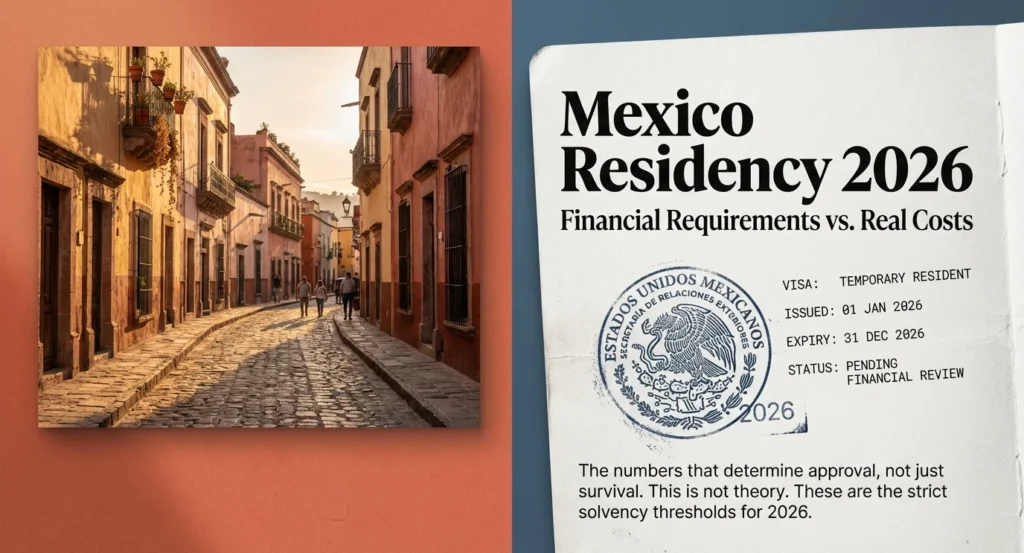
If you’re researching mexico temporary resident visa income requirement, you are likely trying to answer one critical question: do you qualify financially to live in Mexico legally?
This 2026 update breaks down the current mexico residency income requirement, acceptable mexico visa proof of income, savings thresholds, and the real financial planning Americans should consider before applying.
This is not theory. These are the numbers that determine approval.
Monthly Cost Overview
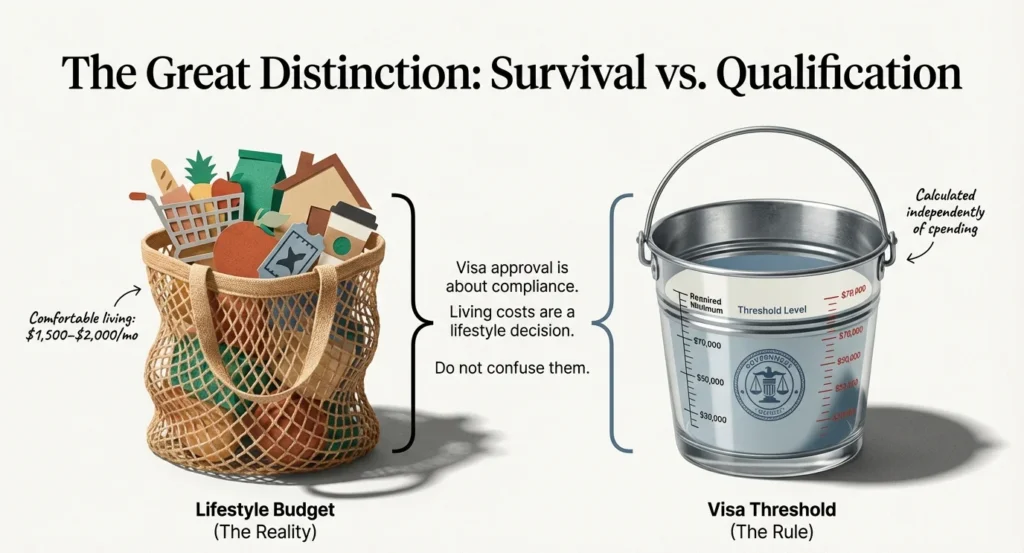
Before discussing visa thresholds, it is important to separate two concepts:
- How much you need to live in Mexico.
- How much you need to qualify for residency.
These are not the same.
In many inland cities, a single person can live comfortably on $1,500 to $2,000 per month depending on housing and healthcare structure. However, the mexico temporary resident visa income requirement is calculated independently of your personal spending habits.
For a full breakdown of real living expenses, see:
https://takviewer.com/cost-of-living/mexico/cost-of-living-in-mexico-2026-breakdown
Visa approval depends on income proof and savings documentation, not lifestyle budgeting.
Housing & Rent Breakdown
Housing costs do not directly affect visa approval, but they affect your financial planning after approval.
Typical 2026 rent ranges:
- Mérida: $500 to $800
- Oaxaca: $450 to $750
- Querétaro: $600 to $900
- Mexico City mid-tier: $900 to $1,500
Most landlords require:
- First month rent
- One month deposit
- Occasionally a guarantor or additional deposit
This means your first 30 to 60 days can require two to three times monthly rent upfront.
Even if you qualify for residency, you still need liquidity for housing setup.
Food & Daily Expenses
Food, utilities, and transportation do not influence visa approval, but they determine sustainability.
Realistic monthly ranges:
- Groceries: $250 to $400
- Dining and lifestyle: $150 to $300
- Transportation: $50 to $150 without a car
Understanding your monthly burn rate matters because consulates often require proof of consistent income for six months.
If your income barely meets the threshold but your lifestyle costs exceed it, approval does not guarantee financial stability.
Healthcare Considerations
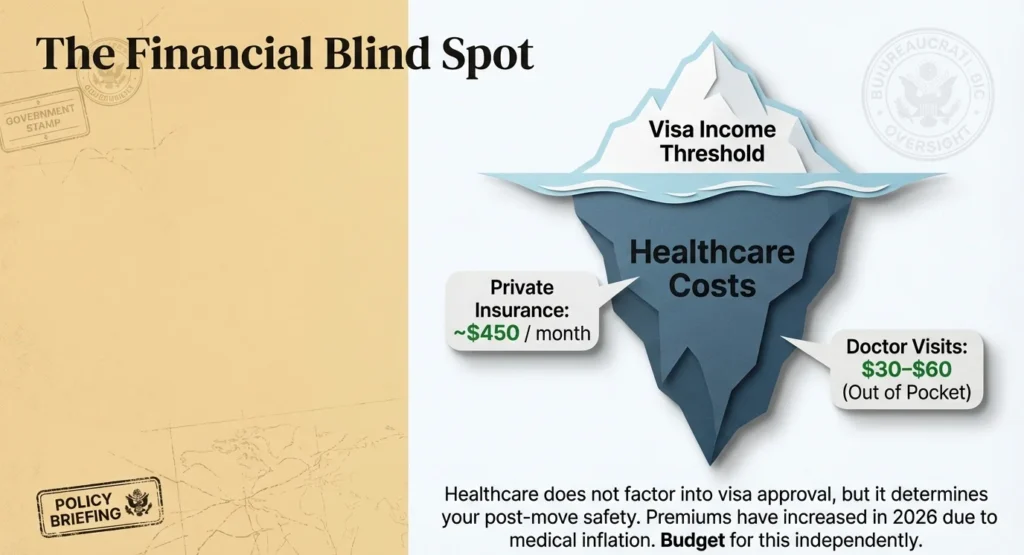
Healthcare does not factor directly into the mexico visa financial requirements, but it is one of the most common financial blind spots.
Private doctor visits typically range from $30 to $60 per appointment.
International private insurance averaged approximately $5,485 annually according to Pacific Prime’s published data, or roughly $450 per month.
Insurance premiums increased in 2026 due to medical inflation.
New residents generally structure healthcare in one of three ways:
- Full international insurance
- High deductible plan with emergency reserve
- Out-of-pocket routine care with catastrophic backup
For deeper planning details, see:
https://takviewer.com/taxes-and-financial/healthcare-costs-in-mexico
Some applicants who initially enter Mexico as visitors while preparing residency applications choose short-term international coverage through providers like SafetyWing:
https://takviewer.com/go/Safetywing
Others compare travel medical policies through VisitorsCoverage before transitioning into long-term residency insurance:
https://takviewer.com/go/Visitorscoverage
Healthcare planning does not influence visa approval directly, but it directly affects financial stability after approval.
Financial Requirements or Visa Rules
This is the core of the mexico temporary resident visa income requirement discussion.
According to 2026 reporting from MEXLAW, applicants must demonstrate either:
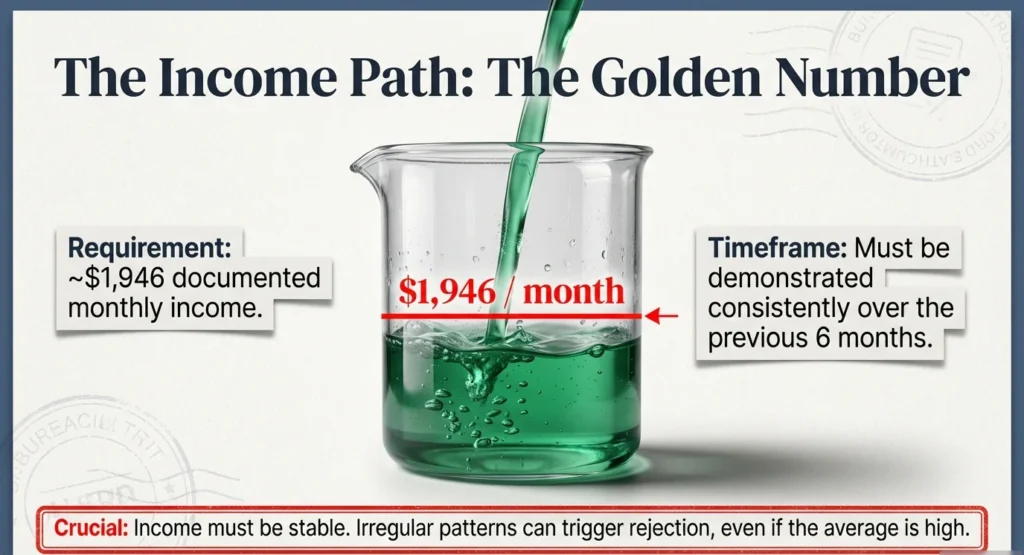
- Approximately $1,946 in monthly income over the previous six months, or
- Approximately $32,426 in average savings balance over the previous twelve months
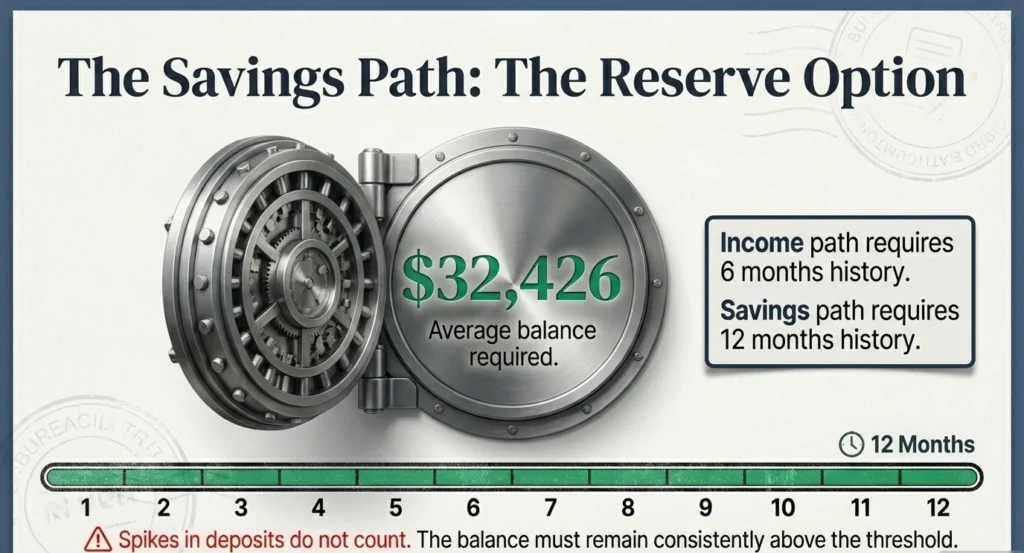
These figures are based on Mexico’s UMA multiplier calculations, and individual consulates may interpret documentation slightly differently.
What Counts as Mexico Visa Proof of Income?
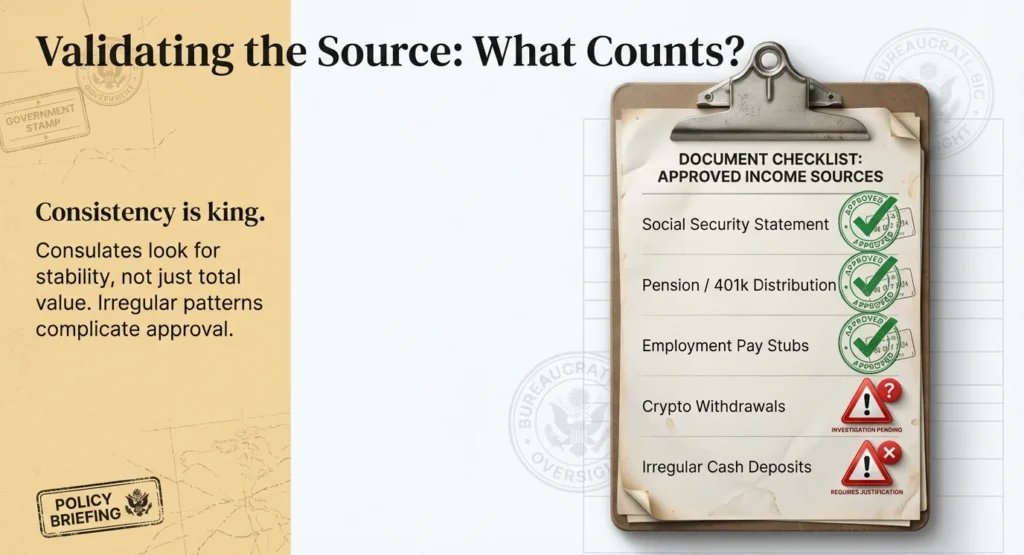
Acceptable documentation typically includes:
- Social Security statements
- Pension income statements
- Investment account distributions
- Employment pay stubs
- Bank statements showing consistent deposits
Irregular income patterns can complicate approval, even if the average meets threshold requirements.
Income vs Savings Strategy
If your monthly income falls short of the threshold, demonstrating savings balance for twelve consecutive months may qualify you instead.
However, savings must remain consistently above the required amount. Temporary spikes often do not qualify.
For comparison, permanent residency thresholds are significantly higher. See:
Mexico Permanent Resident Visa Financial Requirements
https://takviewer.com/retirement-long-term-visa/mexico-permanent-resident-visa-financial-requirements
Temporary vs Permanent Residency Income Comparison (2026)
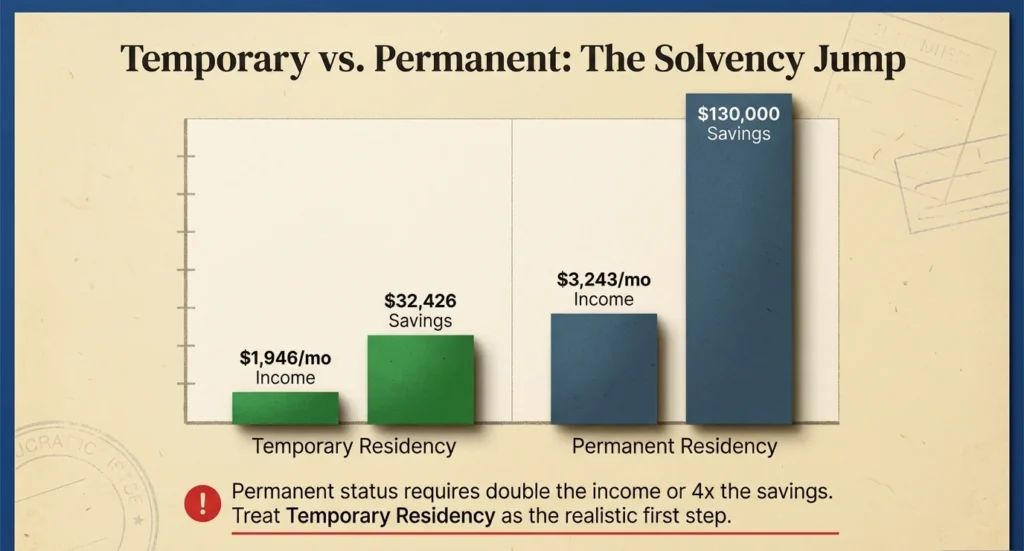
Below is a simplified comparison of the official financial thresholds in 2026.
| Requirement Type | Temporary Residency | Permanent Residency |
|---|---|---|
| Monthly Income | ~$1,946 per month | ~$3,243 per month |
| Savings Balance | ~$32,426 average (12 months) | ~$130,000 average (12 months) |
| Documentation Window | 6 months income history | 6 months income history |
| Savings Review Period | 12 months average balance | 12 months average balance |
Key difference: Permanent Residency requires substantially higher documented income or savings, often more than double the Temporary threshold.
For many applicants, Temporary Residency is the realistic first step. Permanent status often becomes achievable later through renewal pathways or increased financial strength.
Income Requirement by Consulate Differences
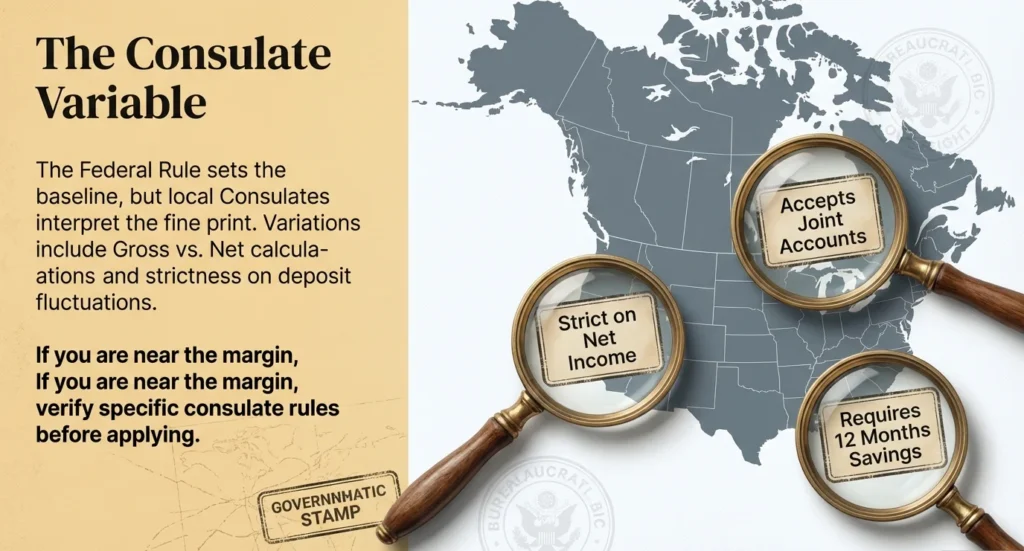
Although Mexico’s federal government sets the UMA-based calculation, individual consulates interpret documentation differently. This is one of the most important and least discussed parts of the mexico residency income requirement process.
What can vary by consulate:
- Whether gross or net income is emphasized
- Strictness around fluctuating deposits
- Acceptance of investment income vs employment income
- Treatment of joint accounts for couples
Some U.S. consulates apply documentation standards more strictly than others. Applicants who are near the minimum threshold should be especially cautious.
Important: If your monthly income averages close to $1,946, even small inconsistencies may trigger additional review.
Many applicants consult legal professionals before filing to avoid rejection and restart delays. This becomes particularly relevant for retirees relying on mixed income streams.
Pros and Cons of the Financial Threshold
Advantages
- Clear income benchmarks reduce ambiguity
- Savings option provides flexibility for retirees
- No age minimum for Temporary Residency
Constraints
- Threshold exceeds basic living costs in many cities
- Income must be documented formally
- Exchange rate fluctuations can affect qualification margins
Many applicants discover that while they can live in Mexico on $1,600 per month, they still need nearly $2,000 per month documented income to qualify.
Final Budget Summary
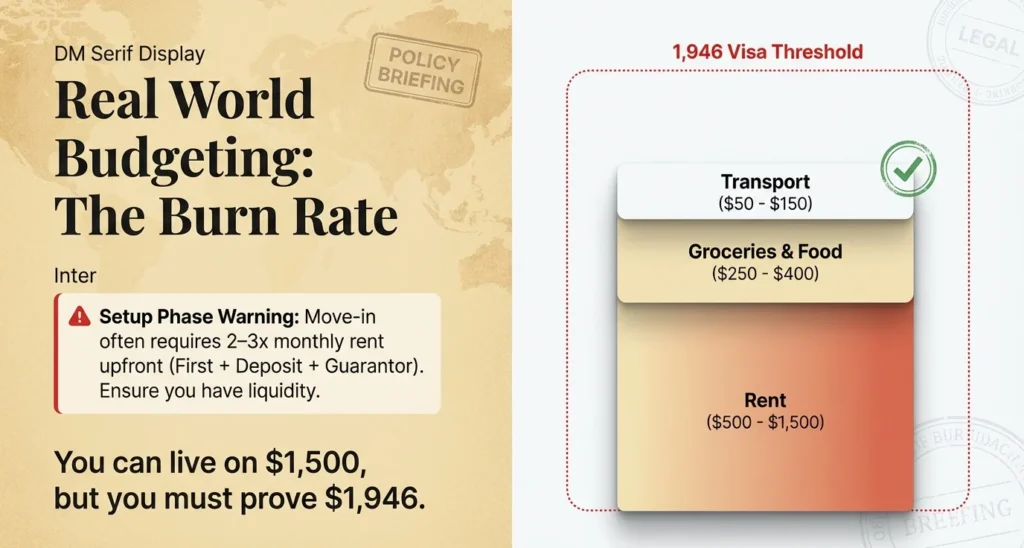
To qualify for Temporary Residency in 2026, you generally need:
- $1,946 monthly documented income, or
- $32,426 maintained savings balance
To live comfortably after approval, most single applicants budget:
- $1,500 to $2,000 monthly inland
- $2,200 to $3,000 in premium or coastal areas
These numbers overlap, but they are not identical.
Visa qualification is a compliance threshold. Cost of living is a lifestyle decision.
Frequently Asked Questions
1. Is this realistic for a single person?
Yes. Many single applicants meet the $1,946 income threshold through Social Security, pensions, or investment income.
2. Is this budget realistic for a couple?
Some consulates increase the income requirement for dependents. Couples should verify specific consulate rules before applying.
3. Which cities are most affordable under this scenario?
Mérida, Oaxaca, Puebla, and Querétaro typically offer lower rent pressure and sustainable monthly costs below $2,000.
4. Does this include healthcare and insurance?
No. The visa threshold is income-based. Healthcare planning is separate and should be budgeted independently.
5. Are these numbers realistic for 2026?
Yes. The figures reflect 2026 published residency thresholds and current financial reporting.
6. Can Social Security qualify as mexico visa proof of income?
Yes. Consistent Social Security deposits are commonly accepted documentation.
7. Can you combine savings and income to qualify?
Some consulates may consider combined financial strength, but applicants typically must clearly meet one primary pathway.
8. Do requirements differ by consulate?
Yes. While thresholds follow federal UMA multipliers, interpretation and documentation standards can vary by U.S. consulate.
9. What happens if your income fluctuates?
Irregular deposits can trigger additional review. Stable six-month documentation is critical.
10. Is Temporary Residency easier to qualify for than Permanent Residency?
Yes. Permanent Residency requires significantly higher income or savings thresholds.
The Practical Reality
The mexico temporary resident visa income requirement is not about whether Mexico is affordable. It is about whether you can demonstrate financial stability under Mexico’s legal standards.
If you meet the income threshold but lack emergency reserves, relocation can still become stressful. If you have strong savings but inconsistent documentation, approval can become complicated.
Qualify first. Budget second. Move third.
That order reduces risk and increases approval probability.